
MITHLUX · Official IPL Device Store
Short answer: If you have PCOS or hormonally driven hair growth, you may still be eligible for IPL — but only with adjusted expectations. IPL can reduce visible hair, but it does not correct the hormonal signal driving regrowth.
This distinction matters. Most frustration comes from expecting IPL to behave like a permanent fix when hormones are still active.
Why hormonal hair behaves differently with IPL
Hormonal hair growth often means:
- Faster regrowth cycles
- Denser or more persistent follicles
- Uneven response across body areas
IPL targets the hair follicle — not the hormone signaling it. That’s why results can be real but slower, and maintenance matters more.
Eligibility: who should start vs pause
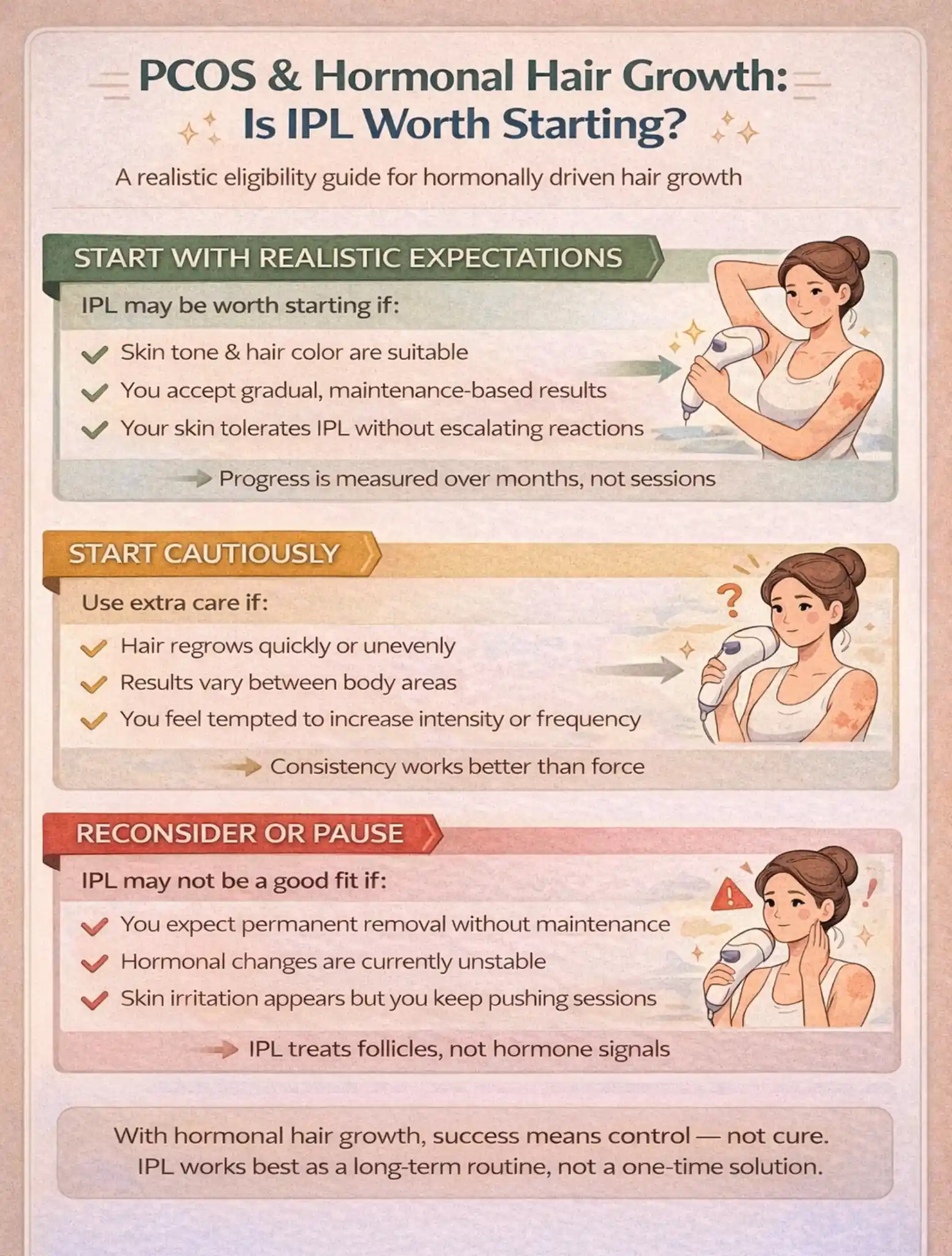
🟢 You may start IPL if:
- Your skin tone and hair color are suitable
- You accept gradual, maintenance-based results
- Your skin tolerates IPL without escalating reactions
🟡 Start cautiously if:
- Hair density is increasing rapidly
- Results vary widely between areas
- You feel tempted to over-treat
🔴 Pause or rethink if:
- You expect permanent removal without maintenance
- Skin reacts but you keep increasing frequency
- Hormonal changes are currently unstable
What “success” looks like with PCOS + IPL
For many users, success means:
- Slower visible regrowth
- Softer or patchier hair
- Reduced need for frequent shaving
It does not usually mean hair never returns.
Why chasing intensity backfires
With hormonally driven growth, increasing energy or frequency rarely overrides the signal. It often just increases irritation and forces pauses that delay any benefit.
This troubleshooting guide explains the pattern well:
Long-term strategy that actually works
- Consistent schedule, not aggressive sessions
- Clear stop rules for irritation
- Maintenance mindset, not cure mindset
Sources & references (third-party, verifiable)
- American Academy of Dermatology — PCOS can be linked with acne + other hormone signs (hair loss / unwanted hair growth)
- NHS — PCOS overview and symptoms
Part of this hub: Back to IPL Eligibility