
MITHLUX · Official IPL Device Store
IPL Basics: What It Is & How IPL Hair Removal Works
A simple, practical guide to how IPL works, why timing matters, and what affects results at home. If you’re new, focus on consistency and comfort—then optimise your routine step by step.
Not sure if IPL is right for you? Start with Skin Tone & Hair Color Guide for IPL and try the IPL Suitability Checker before your first full session.
Start here
How IPL works (in plain English)
IPL uses controlled light energy that is absorbed by hair pigment. Over repeated sessions, it helps reduce regrowth gradually—so routine matters more than “max power.”
Next: See the simple breakdown
Timing matters
Why results take weeks (not days)
Hair grows in cycles. IPL is most effective when you repeat sessions on a realistic schedule (not by treating the same area too often).
What changes outcomes
Factors that affect effectiveness
Skin tone, hair color, energy level, technique, and consistency all influence results. Knowing the limits helps you set expectations and avoid wasted sessions.
Next: See the key factors
On this page
How IPL Hair Removal Works
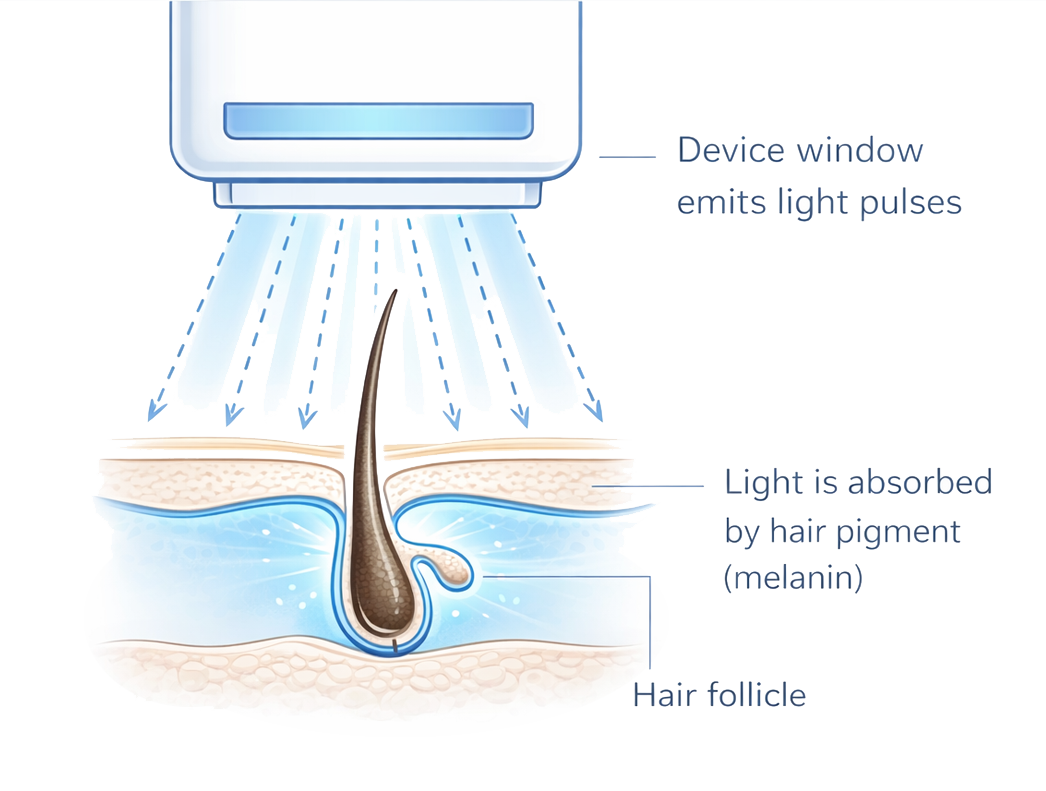
A simplified diagram showing how IPL light is absorbed by hair pigment and targets the hair follicle beneath the skin.
IPL (Intense Pulsed Light) works by delivering controlled light energy to the hair follicle area beneath the skin surface. The light is primarily absorbed by pigment (melanin) in the hair, which helps disrupt regrowth over time.
- IPL targets hair pigment to deliver controlled heat to the follicle area.
- Results build gradually—consistency matters more than “highest intensity.”
- Outcomes vary by skin tone, hair color, energy level selection, and technique.
Helpful next reads:
What Is IPL Hair Removal and How Does It Work?
Place the Window Flat During IPL Use
Hair Growth Cycles & Why Timing Matters
Hair grows in cycles, and IPL is most effective when you repeat sessions consistently over multiple weeks. Understanding timing helps explain why results usually appear gradually rather than immediately.
- Not all hair is affected in a single session because hairs are in different growth stages.
- Treating too often usually does not speed results—and may increase irritation risk.
- A realistic schedule is easier to follow and leads to more predictable progress.
Plan your routine (recommended)
Use a schedule guide to keep sessions consistent and avoid over-treating. See: IPL Hair Removal Schedule and What to Expect in Your First Weeks of IPL Use.
Factors That Affect IPL Effectiveness
Results with IPL can vary depending on skin tone, hair color, energy level selection, and usage habits. The goal is not “maximum power”—it’s a routine your skin tolerates consistently.
- Skin tone & recent tanning: affects how light is absorbed; always start conservatively.
- Hair color & pigment: very light, red, or grey hair may respond poorly.
- Energy level selection: gradual increases usually beat aggressive settings.
- Technique: consistent contact and controlled movement improve consistency.
- Frequency: schedules aligned with growth cycles matter more than intensity.
Related guides:
Skin Tone & Hair Color Guide for IPL
How to Choose a Starting IPL Level
Hair Color and IPL: Why Very Light, Red, or Grey Hair Often Responds Poorly
Common Beginner Mistakes with IPL
Many early frustrations with IPL come from avoidable setup or technique issues. Fixing the basics usually improves comfort and consistency.
- Skipping skin prep: treat only clean, dry skin and shave before sessions.
- Starting too high: increase only after your skin shows good tolerance.
- Moving too fast: slow, even coverage helps avoid missed spots.
- Overlapping too much: repeated pulses on the same spot can irritate skin.
- Expecting instant results: IPL is a multi-week routine, not a one-session fix.
Fixes & how-to links:
How to Prepare Your Skin for Safe At-Home IPL Sessions
Move Slowly, One Area at a Time
Why Isn’t My IPL Working? Common Mistakes and Easy Fixes
In-depth IPL Basics Guides
If you want a deeper understanding (or you’re troubleshooting results), these guides go one level deeper without overwhelming you.
- IPL Hair Removal (Hub)
- At-Home IPL Hair Removal (Hub)
- Best At-Home IPL Hair Removal Device
- IPL vs. Laser Hair Removal: What’s the Difference?
- At-Home Laser Hair Removal (Hub)
If you’re choosing a first routine, keep it conservative: patch test, start low, and follow a schedule you can repeat. For safety boundaries, see Safety & Usage.
Sources & references (third-party, verifiable)
Tip: prioritise authoritative sources (professional dermatology organisations, medical education sites, and public regulatory databases). Links are provided for reader verification.
- DermNet (IPL basics / notes): Intense pulsed light therapy (DermNet)
- American Academy of Dermatology (public guidance on laser hair removal): Laser hair removal: Overview (AAD)
- FDA 510(k) database (public lookup entry point): FDA 510(k) Premarket Notification database
- NCBI Bookshelf (medical education overview of IPL): Intense Pulsed Light (IPL) Therapy — StatPearls (NCBI)
Disclaimer: This page provides general information and is not medical advice. Always follow your device instructions and consult a qualified professional if you have medical concerns.
Beginner essentials
The four pages most beginners need before they commit to a routine.
- How to perform a patch test before IPL
- How often is it safe to use IPL at home?
- How long does at-home IPL take to work?
- What should you do if your skin reacts badly to IPL?
Device reference: User Manual
Common beginner questions (iAsk)
Quick answers for first-time users: suitability, timing, technique, and what to do if results are slow.
- What skin reactions are normal after using IPL?
- Can IPL cause burns or skin damage if used incorrectly?
- How many flashes does an IPL device need?
- Is IPL hair removal permanent?
- Why isn’t my at-home IPL working?
- Can IPL be used on the face or sensitive areas?
- Does hair color affect IPL results?
- How often should you use an IPL device?