
MITHLUX · Official IPL Device Store
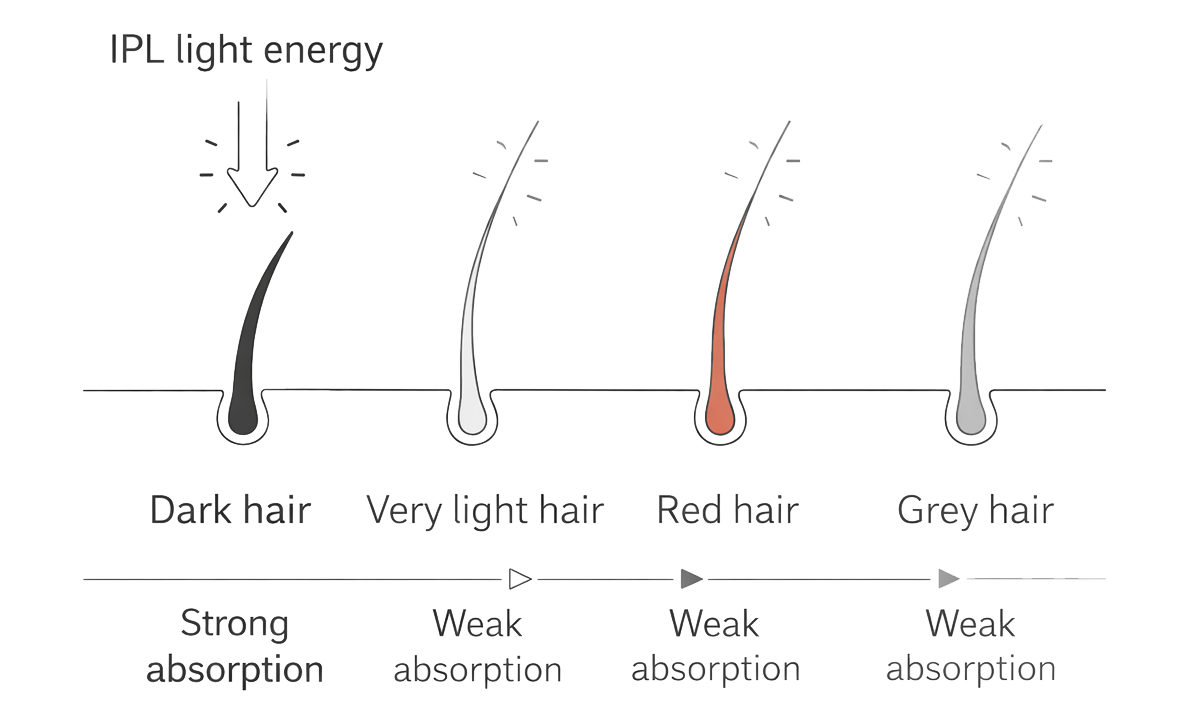
Different hair colors absorb IPL light energy differently depending on pigment concentration.
IPL (intense pulsed light) works by delivering light energy that is preferentially absorbed by pigment (melanin) in hair. When hair contains less pigment, it may not absorb enough energy to produce noticeable changes over time. If you're new to how IPL works, start with What Is IPL Hair Removal and How Does it Work?.
Why very light blond, red, or grey hair may not respond well to IPL
Very light blond hair often contains low levels of melanin. Red hair typically contains different pigment types and may absorb IPL energy less effectively. Grey or white hair usually has very little melanin, which means there may be minimal target pigment for IPL to act on. For a quick suitability check that combines skin tone + hair color, see Skin Tone & Hair Color Guide for IPL or use the IPL Suitability Checker.
- Very light blond hair: often has limited pigment, so results may be subtle or slow.
- Red hair: may respond inconsistently; some users see partial changes, others see little to none.
- Grey/white hair: commonly shows limited or no visible response because pigment is minimal.
What results to realistically expect
- Results may be limited or not visible, even with repeated sessions.
- You may notice slower regrowth in some areas, but outcomes vary by person and body area. If you’re unsure what a realistic timeline looks like, read What to Expect in Your First Weeks of IPL Use and How long does it take to see results with IPL?.
- If most of the hair in the treatment area is very light, red, grey, or white, IPL may not be the best choice. In that case, it’s safer to use this guide first: When IPL Is Not Recommended.
What you can try if your hair is mixed-color
Some people have mixed hair colors (for example, darker roots with lighter ends, or a mix of dark and grey hairs). In these cases, IPL may work better on the darker hairs than on the very light/grey hairs. A realistic approach is to treat consistently and judge results on the darker strands only.
- Do a patch test first and track how your skin responds before committing to a schedule. Use How do you perform a patch test before IPL? as a step-by-step checklist.
- Start conservatively and increase energy only if sessions remain comfortable and skin looks normal afterward. See How to Choose a Starting IPL Level and How to Choose a Starting Level for Home IPL.
- Stay consistent for several weeks, but reassess if you see no change at all. A simple routine is outlined in How often should you use IPL at home? and the hub page IPL Hair Removal Schedule.
When IPL is not recommended
IPL is not suitable for everyone. If you have any contraindications or you are unsure whether IPL is appropriate for you, review the safety guidance first. If you’ve already had an uncomfortable reaction, read What should you do if your skin reacts badly to IPL?.
Bottom line
IPL tends to work best when there is clear contrast between skin tone and hair pigment. If your hair is very light blond, red, grey, or white, outcomes may be limited. A patch test and realistic expectations are essential before you invest time into repeated sessions. If you want a quick “yes/no” check before you start, use the IPL Suitability Checker.
Recommended reading
Helpful guides to confirm fit, set expectations, and follow a safer routine.