
MITHLUX · Official IPL Device Store
Why deeper skin tones need extra caution
Deeper skin tones naturally contain more melanin in the skin. Because IPL delivers light energy that interacts with pigment, a larger share of energy may be absorbed by the skin rather than reaching the hair. When that happens, comfort can drop and the margin for error becomes smaller.
Using IPL on deeper skin tones can increase the risk of:
- Stronger discomfort or excessive heat sensation during treatment
- Temporary or longer-lasting changes in how the skin looks (uneven tone or dark/light patches)
- Lower selectivity when hair-to-skin contrast is low (the device “sees” less difference between hair and skin)
If you’re unsure where you fall, use a reference first: Skin tone chart (Safety & Suitability) › or check quickly with the IPL Suitability Checker ›.
Is home IPL recommended for deeper skin tones?
In general, at-home IPL is not recommended for very deep skin tones, especially when hair-to-skin contrast is low. When contrast is limited, IPL light cannot target the hair as selectively, which increases the chance that the skin absorbs more energy than intended.
If your skin tone is close to the “not suitable” range on a skin tone chart, it’s safer to avoid IPL and choose a different hair-removal method. For more guidance on when to pause or avoid use, see When IPL Is Not Recommended and the safety overview in IPL Hair Removal Safety.
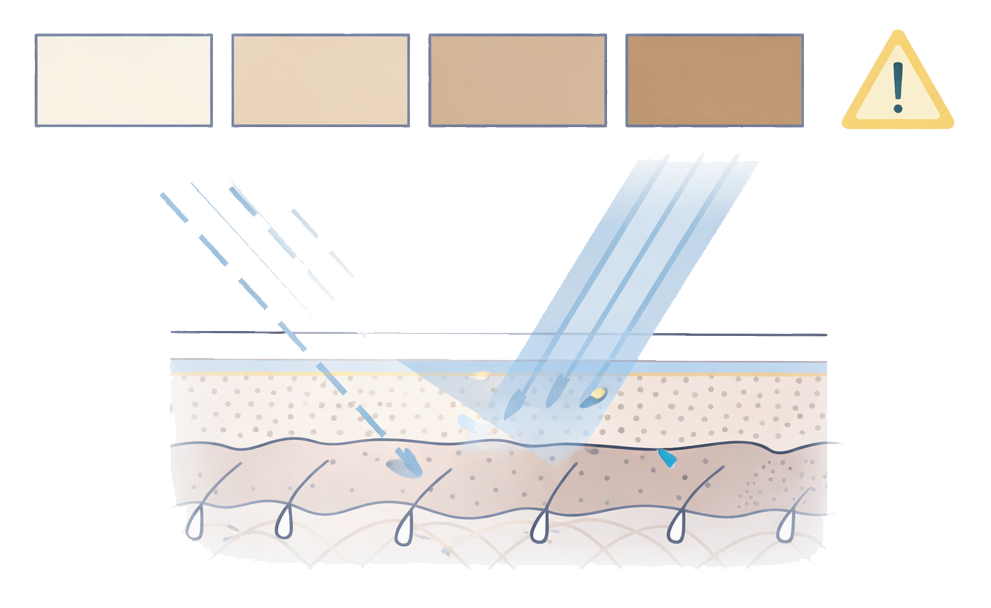
IPL requires extra caution on deeper skin tones due to higher melanin absorption.
Why deeper skin tones carry higher risk
IPL doesn’t “see” hair alone—it responds to pigment. On deeper skin tones, there may be more melanin in the skin itself, which can reduce selectivity. That means a larger share of energy may be absorbed by the skin surface rather than reaching the hair. If you haven’t checked your fit yet, start with Skin Tone & Hair Color Guide for IPL and the quick IPL Suitability Checker.
- Skin melanin can compete with hair melanin, especially when contrast is low
- Light energy may be absorbed more broadly at the skin surface
- Heat can build up before the follicle is effectively targeted
In professional settings, practitioners may use different devices, settings, and skin-cooling approaches depending on skin tone. At home, the safest approach is to be conservative with suitability and starting levels—see How to Choose a Starting IPL Level and How do you perform a patch test before IPL?.
When it’s safer to avoid IPL
Consider avoiding at-home IPL if any of the following apply—especially if your skin tone is close to the “not suitable” range on a skin tone chart. You can confirm where you fall using the chart in Safety & Suitability. When in doubt, it’s safer to pause and reassess than to “push through” discomfort.
- Your skin tone falls within or near the “not suitable” zone on a skin tone chart
- You’re unsure where your skin tone falls (use a reference chart before starting)
- You feel strong discomfort or excessive heat during a test flash
- Your skin shows unexpected changes after a patch test (strong redness, noticeable darkening, or lingering sensitivity)
If you’re unsure whether you should continue, it may help to review When IPL Is Not Recommended and the safety overview in IPL Hair Removal Safety. If you already had an uncomfortable reaction, see What should you do if your skin reacts badly to IPL?.
Recommended reading
A few quick guides to help you confirm suitability and reduce risk.