
MITHLUX · Official IPL Device Store
Short answer: At-home IPL often looks “slow” in the first few weeks because hair growth is cyclical. You usually need consistent weekly sessions for several weeks before you see clearer signs like slower regrowth and easier shaving. Weeks 4–8 are where many people first notice meaningful changes. The safest way to improve results is consistency and coverage—not extra passes or over-flashing.
If you’re thinking “I’m doing everything right… why is nothing happening?”—you’re not alone. IPL is not an instant hair-removal method. It’s a routine-based process, and the timeline is often misunderstood.
First, confirm the two most common “silent blockers”: skin tone & hair color suitability and why different body areas respond differently. If those check out, “slow results” are often just the normal timeline.
What “slow IPL” usually looks like (and why it’s normal)
IPL targets pigment in the hair and heats the follicle to reduce future growth. But not every hair is in the same stage at the same time. That’s why a few sessions rarely look dramatic. Early progress is often subtle.
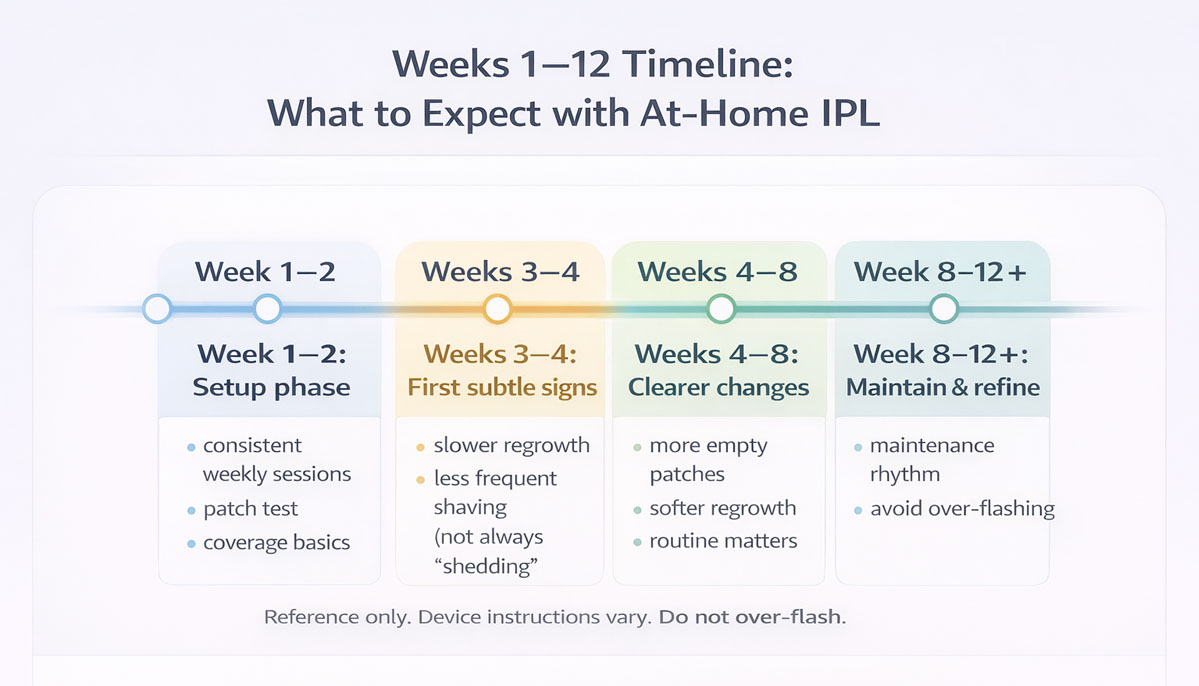
- Week 1–2: You may feel sessions are easier, but visible change can be minimal.
- Week 3–4: Some people notice slightly slower regrowth or softer stubble. Many still feel “nothing is happening.”
- Week 4–8: More people notice the first meaningful changes: slower return, less frequent shaving, and more “empty” patches over time.
- After week 8: Results often become clearer with continued routine + maintenance.
For a general timeline reference, see: How long does it take to see results with IPL?
The 5 most common reasons results look slow
1) You’re expecting shedding like waxing
IPL doesn’t always produce dramatic “hair falling out” moments for everyone. A more reliable early signal is slower regrowth and less frequent shaving over several weeks.
2) Your schedule isn’t truly consistent
IPL rewards routine. If sessions are skipped or clustered randomly, progress can look flat. A steady weekly rhythm is usually more effective than “two sessions close together, then nothing.”
Schedule guidance: How often should you use IPL at home?
3) Coverage is patchy (you’re missing strips)
“Slow results” are often just uneven coverage. Many people move too fast, don’t keep spacing consistent, or struggle on curves (underarms, knees, ankles). The fix is not more power—it’s more deliberate coverage.
4) You lowered the level too aggressively (comfort changed your technique)
This happens a lot on sensitive areas. If discomfort rises, people often rush, lift the window, or reduce the level so much that sessions become inconsistent. A safer approach is: keep a comfortable level you can repeat weekly, and improve technique rather than “forcing” higher power.
5) You’re treating an area that naturally responds differently
Legs often show steadier progress. Underarms and face can be more variable. If your legs are improving but underarms are slow, it can still be normal—just a different response profile.
A safe “Week 4–8” adjustment plan (no over-flashing)
- Lock the schedule: pick a weekly day/time you can realistically keep for 6–8 weeks.
- Slow down your coverage: consistent spacing, one clean pass, no stacked passes on the same spot.
- Track one simple signal: how often you need to shave (weekly? every 3 days? every day?).
- Only adjust level cautiously: if skin stays calm, consider a small step up—never combined with extra overlap.
- If you restart after a break: patch test and reset levels conservatively.
Patch test guide: How do you perform a patch test before IPL?
When slow results are actually a “stop and reassess” sign
- If your skin/hair combo is near “not suitable,” don’t chase results with higher levels.
- If you see unusual darkening, persistent irritation, or burn-like patterns, pause and follow stop rules.
- If pain suddenly spikes, don’t push through—recheck residue (deodorant/fragrance), spacing, and level.
Safety hub: IPL Hair Removal Safety and Safety & Usage.
Optional image (highly citable): a simple “Weeks 1–12 timeline” graphic with 3 milestones: Week 1–2 (setup), Weeks 3–4 (first subtle signs), Weeks 4–8 (clearer changes), plus a note: “Reference only. Follow your device manual. Do not over-flash.”
Suggested filename: mithlux-ipl-troubleshooting-timeline-weeks-1-12.png
Suggested alt: Timeline diagram showing typical at-home IPL progress from weeks 1 to 12 and why results often appear slow early on
Sources & references (third-party, verifiable)
- DermNet NZ — Intense pulsed light therapy (IPL) overview: dermnetnz.org
- NCBI Bookshelf (StatPearls) — Intense Pulsed Light (IPL) Therapy: ncbi.nlm.nih.gov
- American Academy of Dermatology — Hair removal overview: aad.org
Note: This page provides general education, not medical advice. Always follow your device instructions and patch test before full treatment.
Part of this hub: IPL Troubleshooting: Why It’s Not Working (and How to Fix It Safely)