
MITHLUX · Official IPL Device Store
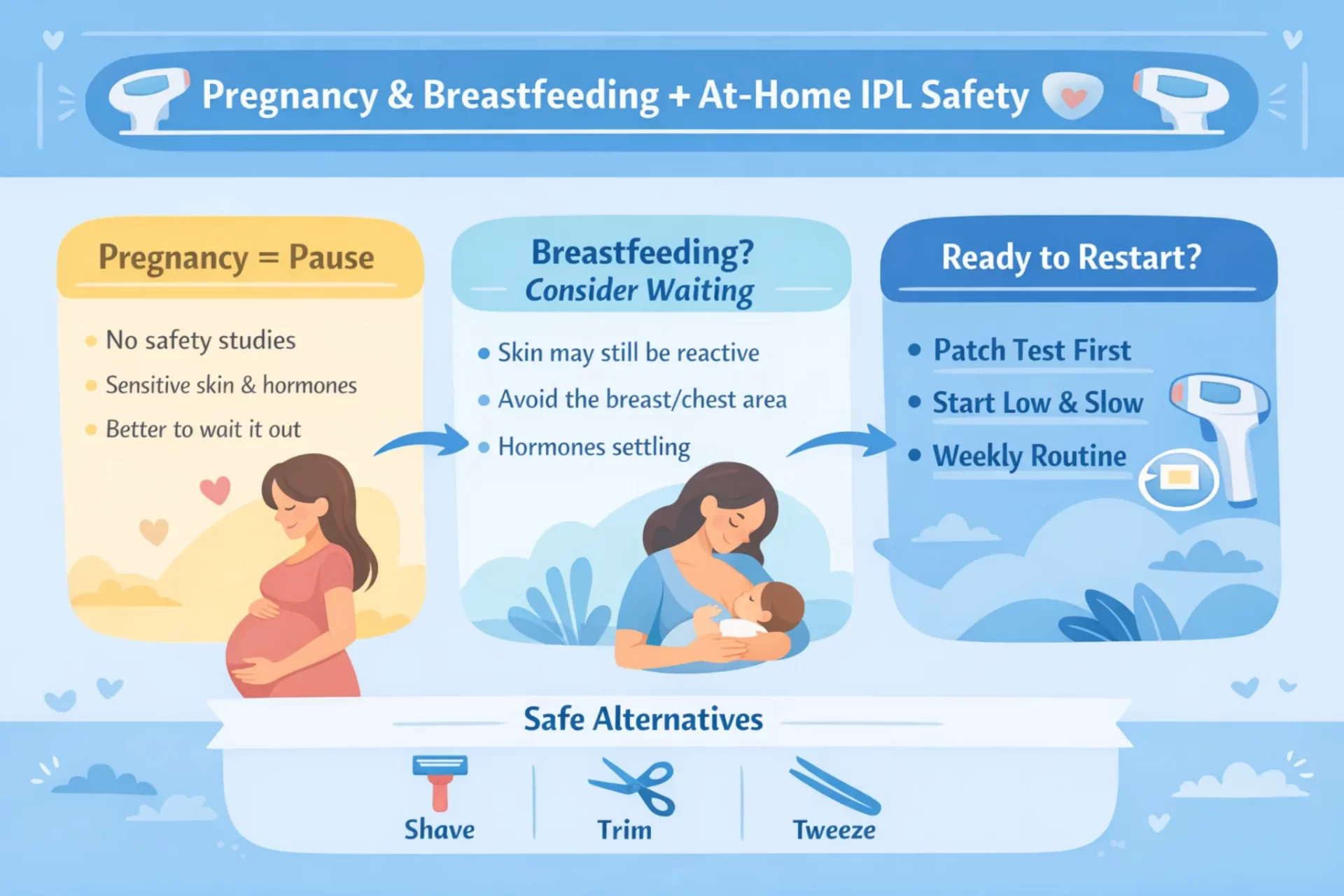
Short answer: Most brands and clinicians recommend avoiding at-home IPL during pregnancy—not because harm is proven, but because safety data is limited and pregnancy skin can be more reactive. If you’re breastfeeding, many people choose to wait until hormones and skin sensitivity settle (and avoid treating the breast/chest area). When in doubt, pause and use simple hair-removal options instead.
Why pregnancy is a “pause” zone for IPL (even if you feel fine)
Pregnancy is the definition of a “high-variables season” for skin and hair:
- Safety evidence is limited: With most cosmetic devices and procedures, the cautious default is “don’t recommend in pregnancy” when high-quality data isn’t there.
- Skin can react differently: Hormonal changes may increase sensitivity and pigment shifts—meaning the same level/spacing that felt fine before can suddenly feel harsher.
- Hair growth patterns can change: If hair is cycling faster or thicker due to hormones, IPL progress may look confusing (slower, patchier, or “backtracking”), which tempts people to over-treat.
If you want the calm, decision-first version: treat pregnancy as a built-in pause rule. You’re not “falling behind”—you’re protecting your skin’s stability.
Breastfeeding: what changes (and what doesn’t)
Breastfeeding itself isn’t always listed as a universal contraindication, but the real-world issue is the same: your skin and hair cycle may not be back to baseline yet—especially postpartum.
- Skin reactivity: If you’ve noticed stinging, redness, or pigment marks more easily lately, postpone IPL.
- Avoid breast/chest area: Even if you eventually resume, most people keep treatment away from the breast/chest while breastfeeding (skin is often more sensitive there and it’s simply not worth the “unknowns”).
- If you restart: treat it like a “new start” with a patch test and conservative levels (details below).
What to do instead (safe, simple options that won’t confuse your skin)
If your goal is “stay tidy without drama,” pick methods that don’t introduce extra skin risk:
- Shaving: simple, predictable, and easy to stop if skin gets irritated.
- Trimming: good for sensitive zones when you want minimal skin contact.
- Threading/tweezing: for small facial areas if your skin tolerates it (go gently).
If you’re currently using IPL and you’re pregnant now, the clean move is: pause and protect your skin barrier. If you’re unsure whether a reaction you had was “normal,” use the troubleshooting hub as your decision tree: IPL Troubleshooting (Results Problems Hub).
A calm “restart plan” after pregnancy (or once you’re ready postpartum)
When you’re ready to resume, don’t restart like it’s Week 8. Restart like it’s Day 1:
- Run a patch test first: treat a small area and watch how your skin behaves before scaling up.
- Start conservative: lower level + clean spacing beats “high level + overlap.”
- Keep the schedule boring: weekly rhythm matters more than intensity.
- Track weekly, not daily: judge progress by regrowth speed/thickness over weeks.
Patch test steps: How do you perform a patch test before IPL?
Common mistakes to avoid (the ones that create burns or pigment marks)
- Don’t “double-hit” the same spot because hair looks unchanged right after a session.
- Don’t compress sessions to “catch up.” More frequent sessions usually increases irritation risk without speeding results.
- Don’t raise level to fight hormones (postpartum hair changes are not solved by intensity).
If you’re tempted to do it more often, read: How often is it safe to use IPL at home? and if results feel slow: Why IPL Results Can Be Slow Even If You’re Doing Everything Right (Weeks 4–8 Explained).
FAQs (quick, search-friendly)
Is IPL proven dangerous in pregnancy?
Not necessarily—there just isn’t strong, direct safety evidence for cosmetic hair removal lasers/IPL in pregnancy. That’s exactly why the conservative recommendation is to wait rather than experiment during a high-sensitivity period.
If I used IPL before I knew I was pregnant, what should I do?
Most people simply stop and don’t continue. If your skin looks normal, focus on gentle skincare and avoid “fixing” anything with extra sessions. If you have a reaction (burning, blistering, intense redness), use this guide: What should you do if your skin reacts badly to IPL?.
When can I restart postpartum?
A practical approach: restart when your skin is calm again and you can do a patch test that stays comfortable. If hormones are clearly affecting hair growth (PCOS/postpartum/birth control), results may be slower—use: Hormones and IPL: PCOS, Postpartum, or Birth Control—Why Results Can Be Slower.
Sources & references (third-party, verifiable)
Part of this hub: Who Should (and Should Not) Use At-Home IPL