
MITHLUX · Official IPL Device Store
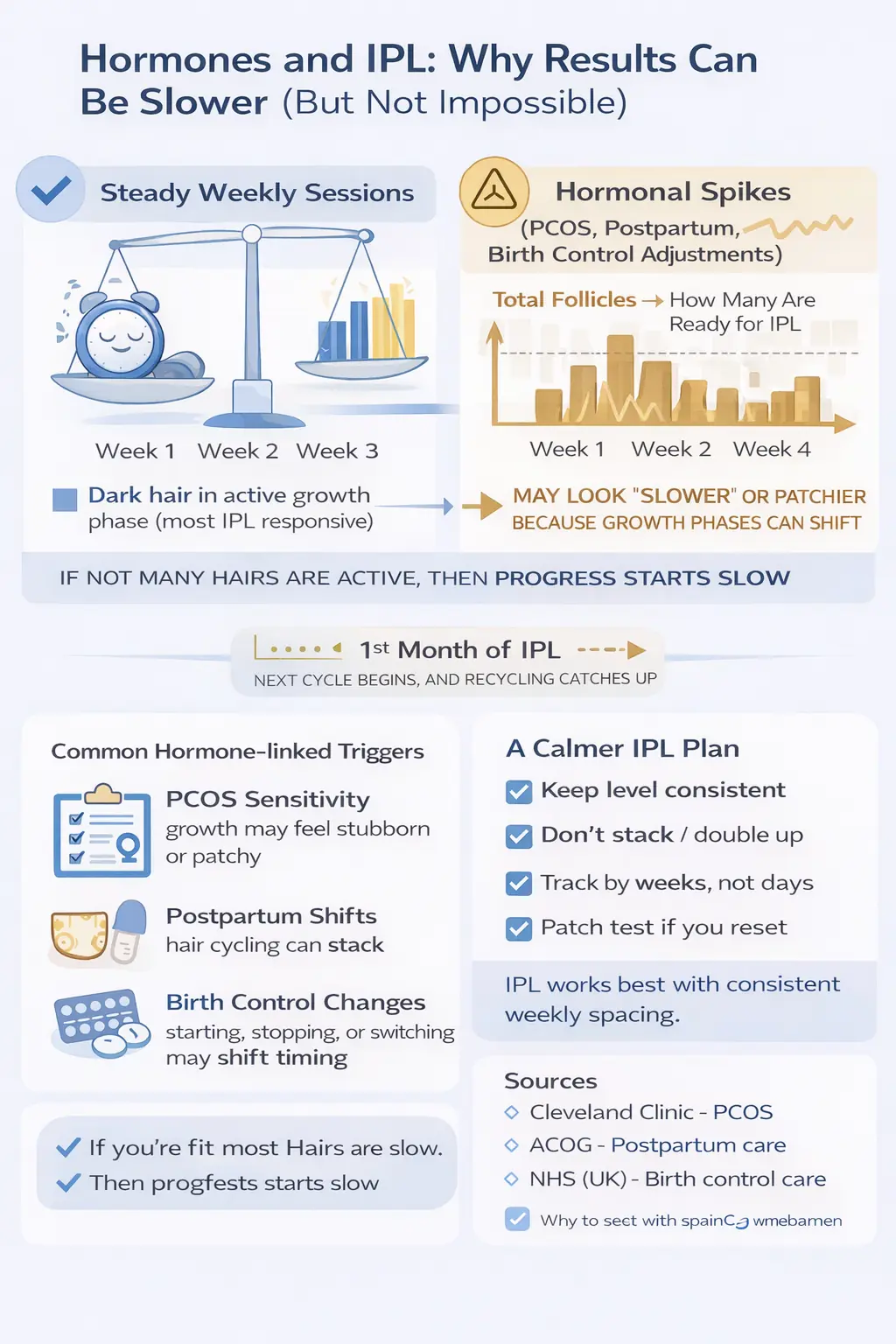
Short answer: Hormonal shifts (like PCOS, postpartum changes, or starting/stopping birth control) can change how many hairs are in the “active-growth” window at any given time—so IPL can look slower or less predictable. A safer fix is usually more consistency (steady weekly sessions) rather than pushing intensity.
If you’re troubleshooting slow progress, you may also like:
Why hormones can make IPL look “slower”
IPL works best when more hair follicles are actively producing a hair (the phase where the follicle is most responsive). Hormonal shifts can change the timing and distribution of those follicles—so even if you’re doing everything “right,” you may see more week-to-week variation or slower-looking progress.
- PCOS / androgen-related patterns: can increase regrowth pressure or make certain zones (face/chin/upper lip) more stubborn.
- Postpartum: hair cycles can temporarily shift after delivery; routines often need a calmer reset and more patience.
- Birth control changes: starting/stopping or switching methods can change growth patterns for a while.
Practical note: “Hormone-related” doesn’t mean IPL won’t work. It usually means your best strategy is steady repetition and conservative skin management, not “heat stacking.”
How to tell it’s hormones vs technique
A quick self-check: if your coverage and spacing are solid, but your progress looks “stop-start” across weeks, hormones may be part of the picture. If results are patchy in a grid-like pattern, it’s usually technique/coverage.
- Looks hormonal: overall regrowth feels “stubborn,” progress varies by month, or certain areas keep “restarting.”
- Looks like coverage: missed strips/patches in the same places repeatedly (common on curves/edges).
- Looks like irritation/overdoing: you’re forced to pause often due to redness or stinging.
If irritation is the issue, this helps: Redness after IPL: what’s normal vs when to pause and IPL suddenly feels more painful: common causes + safe changes.
A safer “hormone-aware” IPL plan
- Keep sessions steady. Weekly sessions during starter phase tend to beat “random catch-up.”
- Don’t chase intensity. If you keep needing breaks, you often lose more time than you gain.
- Track one simple metric. Every 2 weeks, compare regrowth feel + how often you shave—not daily hair panic.
- Use a reset if you paused. Patch test again and restart conservatively: patch test guide.
- Be extra careful on sensitive zones. Especially face/underarms: face or sensitive areas safety.
If you feel tempted to “double up” to catch up, read this first: why IPL can suddenly hurt. In troubleshooting, skin stability is often the fastest path to better results.
Sources & references (third-party, verifiable)
Part of this hub: IPL Troubleshooting