
MITHLUX · Official IPL Device Store
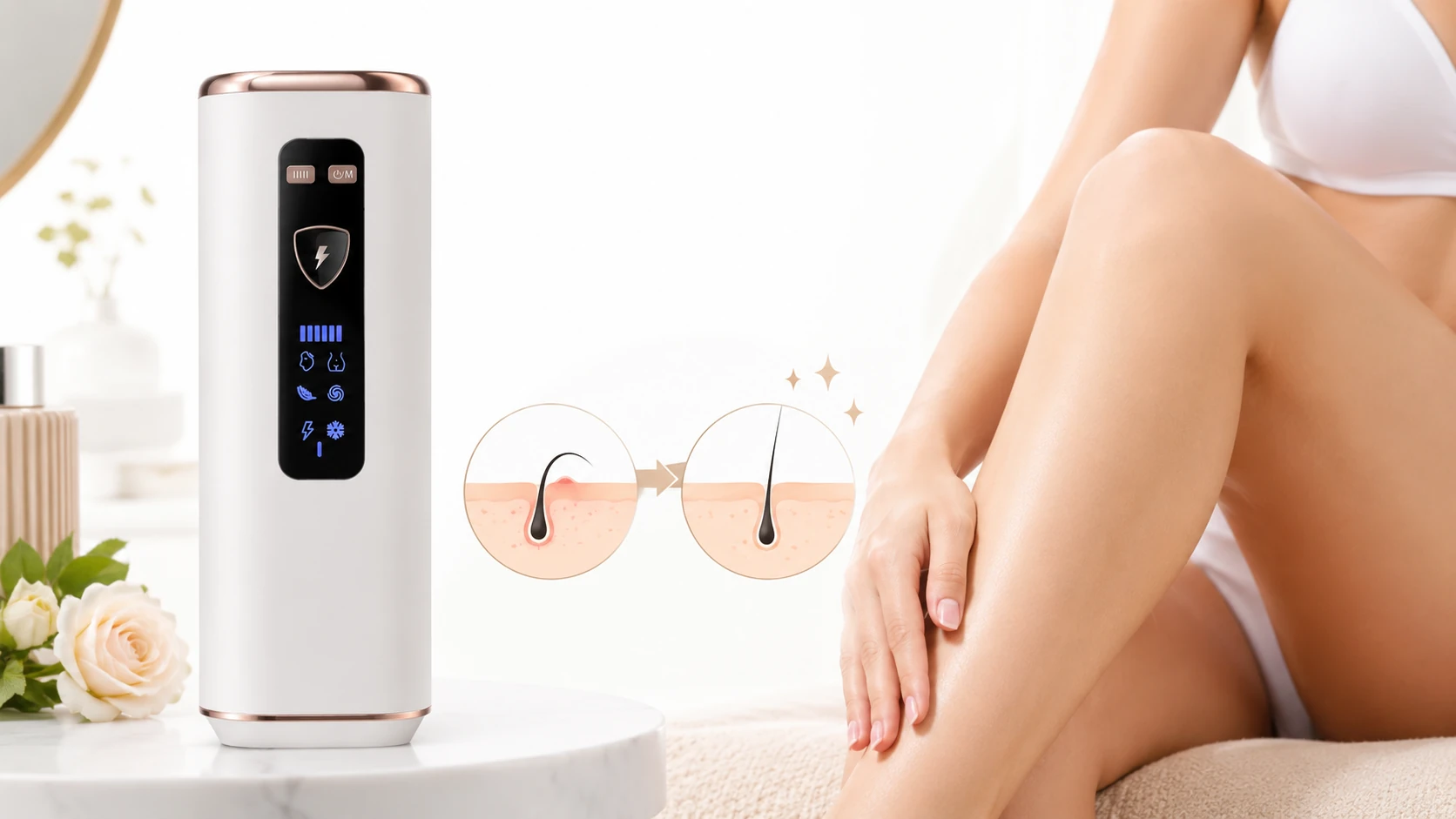
Ingrown hairs are one of the most frustrating parts of regular hair removal. They can appear as small bumps, dark dots, redness, or hairs that seem trapped beneath the skin—especially after shaving, waxing, or epilating.
IPL may help reduce the chance of some ingrown hairs by gradually reducing hair regrowth and lowering the need for frequent shaving. However, IPL is not a direct treatment for an existing inflamed ingrown hair, clogged pore, folliculitis, or another skin condition.
The difference matters. IPL works by targeting pigment in the hair and affecting future hair growth. It does not work by exfoliating the skin or physically releasing hairs that are already trapped beneath the surface.
Why Do Ingrown Hairs Happen?
An ingrown hair develops when a hair grows back into or underneath the skin instead of growing normally outward through the follicle opening.
This can happen for several reasons, including:
- very close shaving
- frequent shaving or repeated friction
- waxing or epilating
- coarse or curly hair
- dead skin blocking the follicle opening
- irritation around the hair follicle
Areas with thicker hair or frequent hair removal—such as the bikini line, underarms, legs, and chin—can be particularly prone to the problem.
If bumps appear specifically after an IPL session, they are not always ingrown hairs. Our guide to bumps after IPL explains how irritation, clogged follicles, and ingrowns can look similar.
So, Can IPL Help Prevent Ingrown Hairs?
IPL can indirectly help reduce ingrown hairs when repeated hair growth and shaving are major contributors.
IPL delivers pulses of light that are absorbed by pigment in suitable hair. With consistent use over time, responsive hairs may grow back more slowly, become less noticeable, or appear less frequently.
That can change the cycle that contributes to ingrown hairs:
less regrowth → less shaving → less repeated follicle irritation → fewer opportunities for hairs to become trapped.
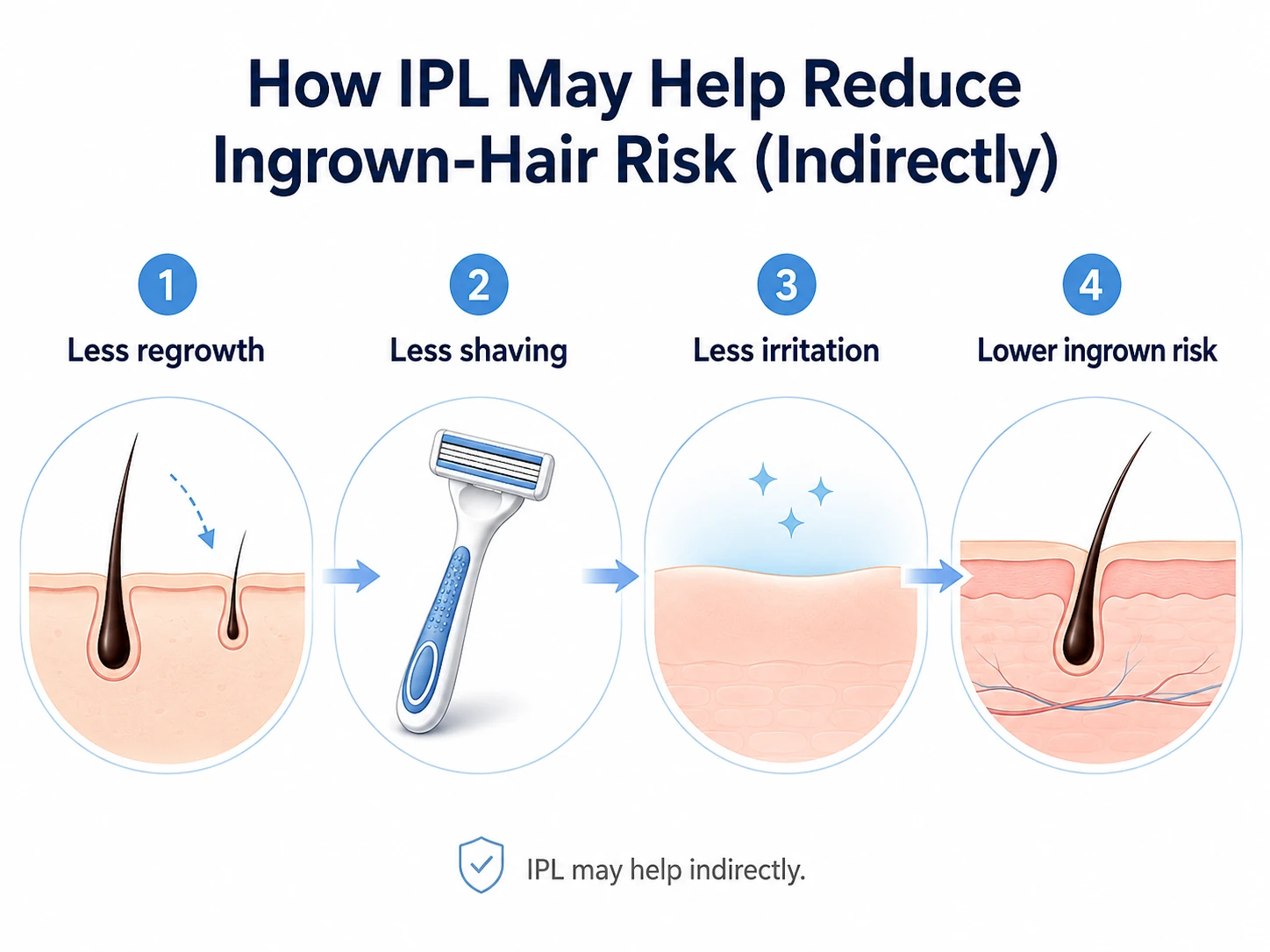
This is also one reason some people notice that areas prone to strawberry legs look smoother as their hair regrowth decreases.
However, the improvement is usually gradual rather than immediate.
IPL Does Not Remove an Existing Ingrown Hair
This is an important distinction.
If a hair is already trapped under the skin, IPL should not be thought of as a tool for immediately releasing it. The light pulse does not mechanically remove the trapped hair or clear the follicle opening.
IPL also should not be used as a substitute for appropriate care when an area is significantly inflamed, painful, broken, infected, or otherwise irritated.
If the skin is actively irritated, it is usually better to allow the area to settle before continuing treatment rather than repeatedly flashing over uncomfortable skin.
Our guide on redness after IPL explains when mild temporary reactions may be expected and when it makes sense to pause.
Why Reducing Shaving May Matter
Shaving is not inherently bad for the skin, and it is normally the preferred way to remove visible hair before an IPL session.
The problem is that people who experience rapid regrowth may need to shave frequently. Repeated close shaving can increase friction and irritation, particularly in areas where the hair is coarse or grows at an angle.
If IPL gradually reduces how quickly the hair returns, you may eventually need to shave less often.
That means the potential benefit is not simply “IPL prevents ingrown hairs.” A more accurate explanation is:
IPL may reduce some of the hair-removal habits and regrowth patterns that contribute to recurring ingrown hairs.
If you are using IPL regularly, see whether it is OK to shave between IPL sessions.
What About Waxing or Epilating?
Waxing and epilating remove hair from the root. That can be useful for temporary smoothness, but it is usually not the preferred approach while following an IPL routine because IPL needs pigment in the hair structure to absorb the light effectively.
For that reason, shaving is generally a better companion to an IPL routine than repeatedly waxing or epilating the treatment area.
If you are switching methods, read Can You Do IPL After Waxing or Epilating? for a more detailed explanation.
Where Might IPL Be Most Helpful for Recurring Ingrown Hairs?
Bikini Line
The bikini line is a common area for ingrown hairs because the hair can be coarse and the skin experiences friction from clothing, shaving, and movement.
Reducing repeated coarse hair regrowth may therefore reduce one of the factors contributing to recurring bumps.
For area-specific guidance, see our IPL bikini line results timeline.
Underarms
Underarms combine thicker hair, frequent shaving, moisture, friction, and naturally folded skin. This can make bumps particularly difficult to interpret.
IPL may help by reducing hair regrowth over time, but irritated underarm skin should still be treated cautiously.
See what to do if you get bumps after underarm IPL and our guide to underarm IPL aftercare.
Legs
On the legs, recurring follicle dots and ingrown hairs can overlap with what people commonly call strawberry legs.
If frequent shaving is part of the problem, gradually reducing hair regrowth may make the skin look more even over time.
For expectations specific to this area, see the leg IPL results timeline.
Chin and Facial Hair
Some women experience coarse chin hairs that repeatedly return in the same areas. These hairs may also be associated with frequent plucking or shaving.
IPL may be useful when the hair and skin tone are suitable, but facial treatment requires more care than large body areas.
See Can You Use IPL on Chin Hair? for more detailed guidance.
Does Hair Thickness Affect Ingrown Hair Risk?
Coarse hair can be more noticeable when it grows back and may be more likely to curve or become trapped beneath the skin in some people.
At the same time, darker and coarser hair often contains more pigment for IPL light to target—provided the surrounding skin tone is suitable for the device.
This does not mean every coarse hair will respond equally, but it can make the relationship between hair reduction and recurring ingrowns especially relevant.
For more on this topic, see Does IPL Work on Coarse Hair? and Does Hair Thickness or Coarseness Affect IPL Results?
How Long Could It Take to Notice Fewer Ingrown Hairs?
There is no universal timeline because IPL does not directly treat the ingrown hair itself.
Any improvement depends on the underlying hair gradually responding to repeated IPL sessions.
In the early weeks, hair may still grow normally and shaving may still be necessary. As responsive hairs begin to grow more slowly or less densely, some users may notice they are shaving less frequently.
That is when the conditions that encourage recurring ingrown hairs may begin to change.
Instead of looking only for hairs to disappear, useful early signs can include slower regrowth, softer-feeling regrowth, or longer intervals before shaving feels necessary.
Our guide to early signs that IPL is working explains these changes in more detail.
Can IPL Make Ingrown Hairs Worse at First?
Sometimes the skin can temporarily look bumpier after shaving or after beginning a new hair-removal routine. This does not necessarily mean that IPL is creating new ingrown hairs.
Possible explanations include shaving irritation, follicular redness, hairs beginning to shed, or pre-existing clogged follicles becoming more noticeable.
What matters is how the skin looks and feels.
Mild temporary redness is different from persistent pain, significant swelling, blistering, broken skin, or worsening inflammation. If the reaction is more than mild, pause treatment rather than repeatedly treating the same irritated area.
What IPL Cannot Fix
Not every bump or dark follicle is caused by an ingrown hair.
IPL is not a direct treatment for:
- keratosis pilaris
- active folliculitis
- acne
- post-inflammatory pigmentation
- blocked pores
- skin infections
- other inflammatory skin conditions
This distinction is particularly important when discussing strawberry legs. Dark follicle dots can come from several different causes, and hair reduction only addresses the hair-related part of the problem.
Read Does IPL Help With Strawberry Legs? for a full explanation.
How to Use IPL If You Are Prone to Ingrown Hairs
If recurring ingrown hairs are one reason you are considering IPL, a simple routine is usually better than trying to treat the area aggressively.
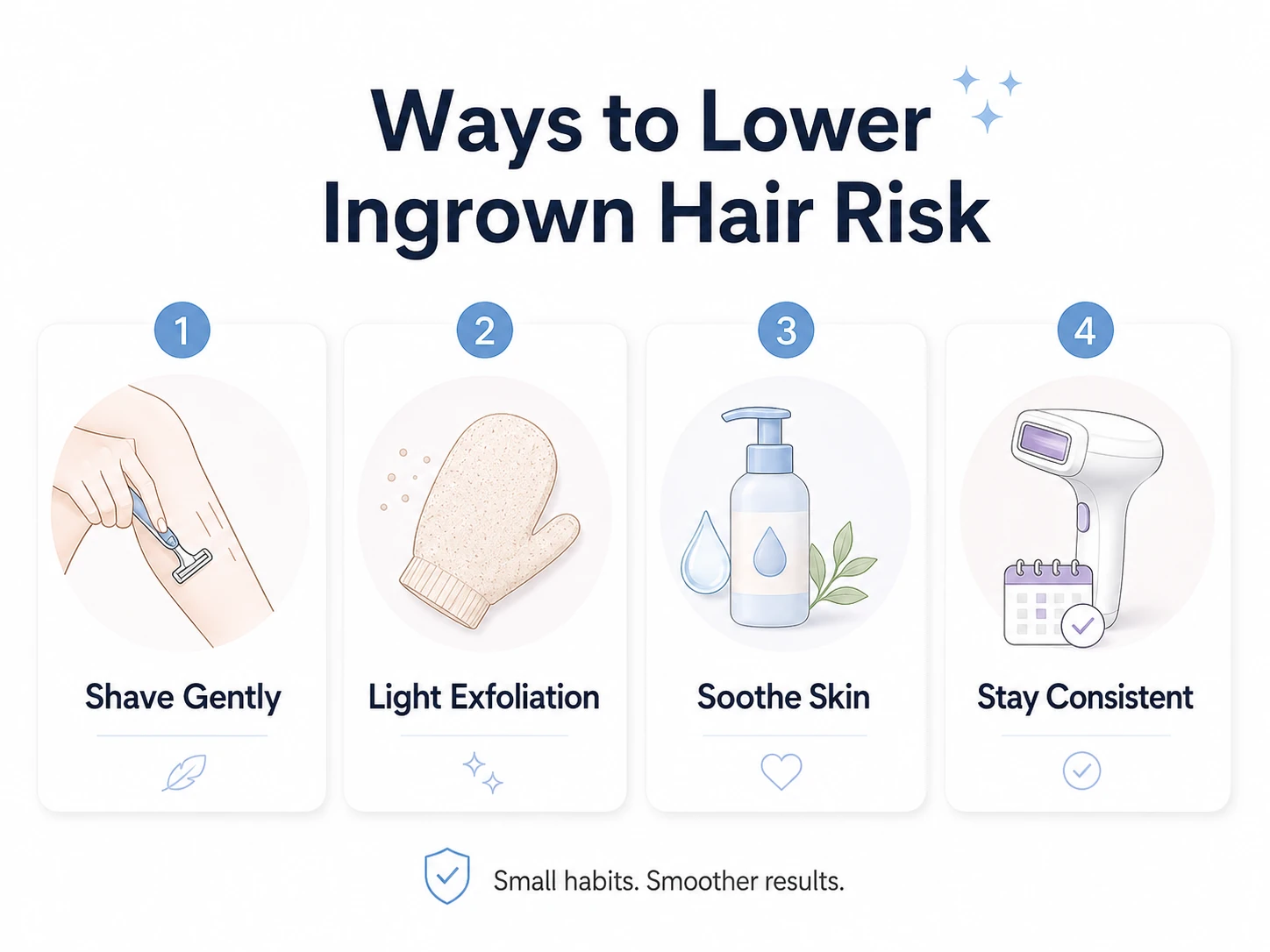
- Shave rather than wax or pluck before IPL.
- Use IPL only on calm, intact skin.
- Start at an appropriate energy level rather than automatically choosing the highest setting.
- Avoid repeatedly flashing the same spot in an attempt to speed up results.
- Follow a consistent schedule and allow the hair cycle time to respond.
- Keep skincare gentle if the area is easily irritated.
If you are new to IPL, our guide to preparing your skin for at-home IPL covers the basic preparation steps.
And if you are unsure how much overlap is appropriate, see One Pass or Two Passes?
Should You Exfoliate to Prevent Ingrown Hairs While Using IPL?
Gentle exfoliation can be part of some people's regular skincare routine, but timing matters when IPL is involved.
Avoid turning the treatment area into an aggressive combination of shaving, strong acids, scrubs, and IPL all at once. Too many irritating steps can make it difficult to tell whether a bump is an ingrown hair or simply irritated skin.
If you use active skincare ingredients, review the timing carefully. Our IPL skincare guides cover topics such as AHA/BHA before IPL and retinol before IPL.
Does IPL Permanently Prevent Ingrown Hairs?
No method should be described as guaranteeing that an ingrown hair will never occur again.
IPL is better understood as a method for long-term hair reduction. If fewer suitable hairs grow back—and if you therefore shave less often—the conditions that contribute to recurring ingrowns may also become less common.
Maintenance may still be needed because hair growth can change over time.
For a broader explanation, see Is IPL Hair Removal Permanent?
When Should You Pause IPL?
Do not keep flashing over an area simply because you want an ingrown hair or bump to disappear faster.
Pause IPL over skin that is significantly irritated, broken, blistered, infected, or unusually painful. If a skin reaction is persistent, severe, or difficult to identify, medical advice is more appropriate than continuing home treatment.
Our guide When Should You Stop IPL and Seek Medical Advice? explains warning signs in more detail.
So, Does IPL Help Prevent Ingrown Hairs?
IPL may help reduce recurring ingrown hairs when frequent hair regrowth and repeated shaving are major contributing factors.
It does this indirectly: suitable hairs may gradually grow back more slowly or less densely, which can reduce how often the area needs to be shaved and may reduce repeated follicle irritation.
But IPL does not directly remove a trapped hair, clear a clogged pore, or treat an inflamed skin condition.
A useful way to think about it is:
IPL does not treat the ingrown hair itself—it may reduce the future hair growth cycle that helps create recurring ingrown hairs.
For people whose bumps are strongly connected to coarse hair and frequent shaving, that distinction can still make IPL a useful long-term hair-reduction option.