
MITHLUX · Official IPL Device Store
Short answer: If one part of the treatment area looks darker than the rest, do not treat the whole area as if it were uniform. Patch test the darker section separately, start more conservatively, and only expand if the skin stays calm over the next 24–48 hours.
Not all skin is evenly toned. Even within the same body area, one section may look slightly darker because of friction, shaving history, post-inflammatory marks, natural pigmentation, old irritation, or frequent rubbing from clothing. This matters with IPL because safe use depends on treating what is actually in front of you — not what the area “usually” looks like.
A common mistake is assuming that if most of the area seems fine, the darker section will behave the same way. But with IPL, uneven tone means you should slow down and observe more carefully. The goal is not to avoid the whole area forever. The goal is to avoid treating a mixed-tone area too aggressively before you understand how each section responds.
If you are completely new to patch testing, start with How Do You Perform a Patch Test Before IPL?. This guide builds on that idea, but focuses specifically on areas where one section is visibly darker than the rest.
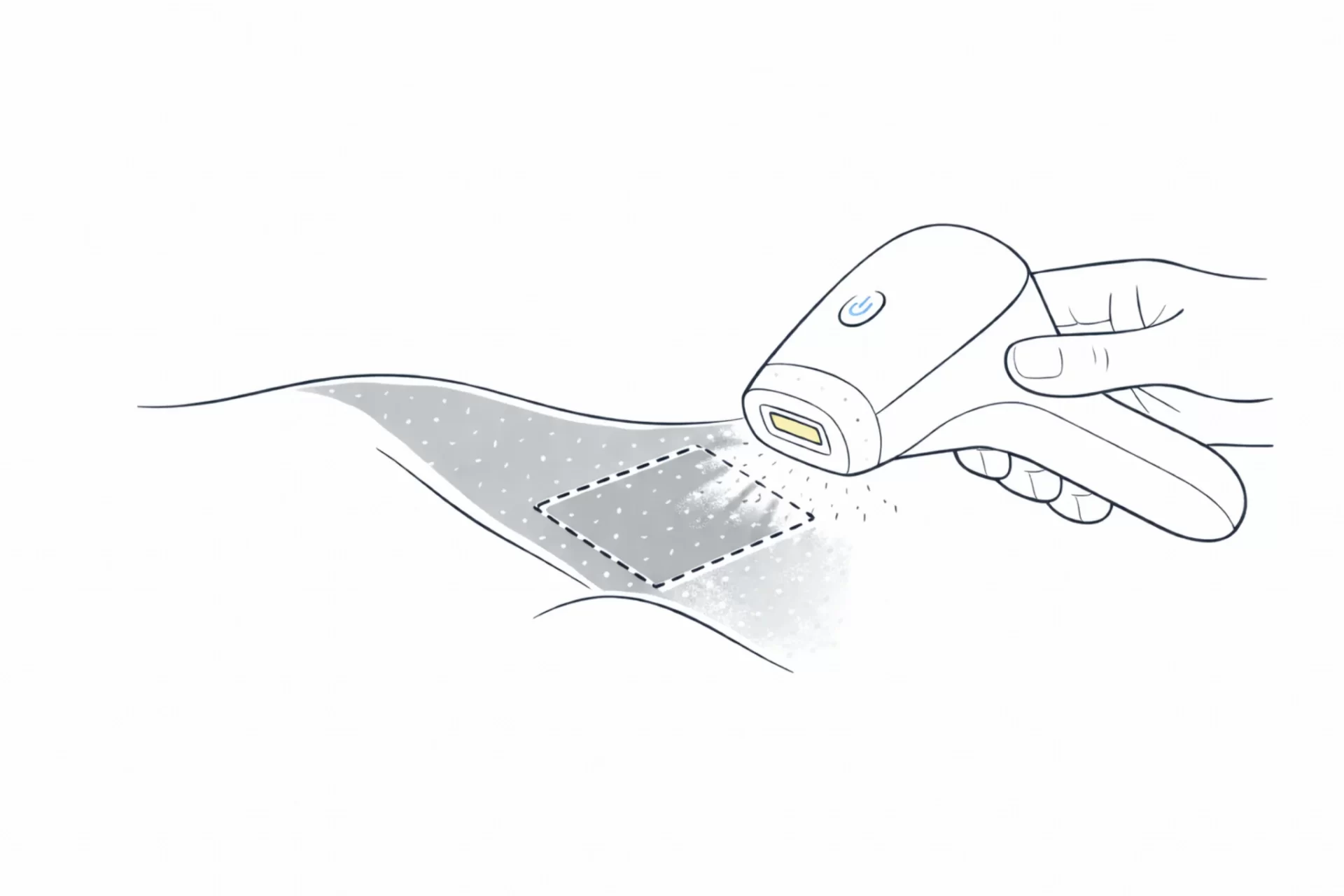
Why uneven tone changes the way you should approach IPL
IPL works best when you make level and coverage decisions based on the actual skin tone of the specific section you are treating. When one part is darker, the area is no longer a “single zone” in practical terms. It becomes a mixed area that deserves separate judgment.
This does not mean every small difference is dangerous. It means you should stop thinking in terms of one automatic setting for the entire region. A darker patch may need a more cautious patch test, a lower starting level, or a decision to pause while the surrounding skin may still be manageable. The important thing is not to flatten those differences into one rushed choice.
If you are trying to understand whether IPL is appropriate for your overall skin and hair contrast in the first place, it also helps to review Does Skin Tone Affect IPL Safety? and Does At-Home IPL Work for All Skin Tones?.
What counts as an “uneven area” before IPL?
An uneven area is any treatment zone where one section is visibly different enough that you would hesitate to call it the same tone as the rest. That may include:
- a patch that looks more brown, gray, or shadowed than the surrounding skin,
- an area darkened by friction, shaving irritation, or repeated rubbing,
- a fold or crease that holds more pigment,
- an area recovering from irritation, bumps, or ingrown-related marks,
- or a zone where tanning, self-tanner, or sun exposure changed only part of the area.
The question is not whether it is “perfectly even.” Human skin rarely is. The question is whether the difference is meaningful enough that you should test that section separately instead of treating everything the same way.
Where this comes up most often
This issue is especially common in areas where tone variation is normal or where the skin goes through more friction, folding, or shaving stress. Examples include:
- underarms,
- bikini line edges,
- inner thighs,
- upper lip or around the mouth,
- knees, ankles, elbows, or other joints,
- and any spot recovering from bumps, redness, or recent irritation.
If your question is really about whether a sensitive zone should be treated at all, these may also help: Is IPL Safe for Underarms? Where to Stop and What to Avoid, Can IPL Be Used on the Face or Sensitive Areas?, and Can You Treat Underarms and Bikini Line on the Same Day? Spacing, Levels, and What to Adjust.
How to patch test uneven areas safely
The safest way to approach uneven tone is to stop thinking of the area as one block. Break it into sections.
- Identify the darker section clearly. Do this in good lighting before you begin, not halfway through treatment.
- Treat the darker section as its own patch test area. Do not assume the result from the lighter surrounding skin applies automatically.
- Start conservatively. If you would normally begin at one level, consider a lower starting point for the darker section.
- Keep the tested spot small and controlled. Do not “blend outward” into a large area on the first try.
- Observe for 24–48 hours. Look for whether the skin stays calm, not just whether the flash felt tolerable in the moment.
- Expand gradually only if the response is uneventful. A calm small test is a better green light than a rushed full-area guess.
This same logic applies if you are working around areas that naturally differ in sensitivity or tone. For example, on legs, joints and contours may need more caution than flat areas. On the face, the upper lip may need a more conservative approach than the cheeks. If you are comparing body regions, read Should Face and Body IPL Follow the Same Schedule? Why Upper Lip Often Needs a Different Approach.
What you should watch for after the patch test
What matters most is not whether the test felt dramatic. What matters is how the skin looks and feels over the following 24–48 hours.
A patch test is not successful just because you “got through it.” It is successful when the response stays calm enough that you feel confident expanding carefully.
That is why it helps to know what normal short-term reactions can look like. You may want to review What Skin Reactions Are Normal After Using IPL? and Redness After IPL: What’s Normal vs When to Pause.
If a darker section looks noticeably more reactive than the surrounding skin, that is useful information. Do not try to “catch up” by repeating passes or increasing intensity. Instead, keep treating that section as a separate decision point.
Should you lower the level just for the darker part?
In many cases, yes — that is the more realistic approach. A mixed-tone area does not always need one single treatment level. If part of the skin clearly deserves more caution, lowering the level for that section is often smarter than forcing the same setting everywhere.
The goal is not to maximize intensity. The goal is to make the routine sustainable and predictable. A slightly slower but calmer start is usually better than overcommitting early and then having to pause the whole area.
This idea becomes even more important in zones that are already naturally more reactive. For example, underarms may need a different level decision than legs, and joints may need more caution than flat sections. You may also find these useful: Should You Lower the Level for Underarms vs Legs? and Should You Lower the IPL Level for Knees, Ankles vs Thighs?.
When to pause instead of patch testing
Patch testing is helpful when the skin is uneven but basically calm. It is not a substitute for waiting when the area is actively irritated, freshly darkened, or hard to assess clearly.
You may want to pause first if:
- the darker section also feels irritated, stingy, or freshly inflamed,
- the tone changed recently after sun exposure, shaving irritation, or skincare,
- there are active bumps, broken skin, or obvious discomfort,
- or you are not sure whether the change is stable enough to judge yet.
When the skin is not stable, the better question is often not “Can I patch test it now?” but “Should I wait until the area is easier to read?” In that situation, these guides may help more: How Long Should You Wait After Sun Exposure Before IPL?, What If You Used Deodorant or Perfume Before IPL?, and What Should You Do If Your Skin Reacts Badly to IPL?.
What not to do with a darker patch
When people feel uncertain, they often make one of four mistakes:
- pretending the darker part does not matter and treating the full area normally,
- using multiple passes because the hair seems coarse there,
- raising the level because the surrounding skin handled it well,
- or treating the patch repeatedly too soon because they want quick certainty.
Those reactions usually come from impatience, not good observation. A darker section should make you narrower and calmer, not more aggressive.
If your bigger concern is patchy outcomes or area-to-area inconsistency, these are also useful next reads: Patchy IPL Results: How to Fix Missed Spots Without Over-Flashing and Why Does One Side Look Better Than the Other After IPL?.
What if the surrounding skin is fine but the darker section is not?
That can happen — and it does not mean the whole routine has failed. It simply means that one section may need its own pace. Sometimes the right decision is to continue the easier surrounding area while pausing, lowering, or retesting the darker patch separately later.
This is one reason rigid perfection is not always the smartest IPL mindset. Consistency matters, but uniformity is not always realistic. If one small area needs more time, that is better than forcing everything into the same weekly rhythm. For that reason, it may also help to read Can You Do IPL on an Irregular Schedule? What Matters More Than a Perfect Weekly Routine.
A simple decision rule to use
If only part of the area is darker than the rest, use this rule:
- Treat the darker section separately.
- Patch test it conservatively.
- Wait 24–48 hours.
- Expand only if the response stays calm.
- Pause if the skin is irritated or hard to assess clearly.
The safest IPL routines are usually not the fastest ones. They are the ones where you keep reading the skin honestly, section by section, instead of forcing one decision onto an area that is telling you it is not uniform.