
MITHLUX · Official IPL Device Store
Short answer: Yes. IPL burns do not always hurt immediately. Some injuries show up as a delayed reaction: the skin looks mildly red at first, then worsens over 6–72 hours. This is why timing and visual cues can be more reliable than pain alone.
People expect pain to be the main safety alarm. But nerve response and heat injury do not always match. You can exceed thermal tolerance quietly—especially on sensitive areas or when your skin barrier is already stressed.
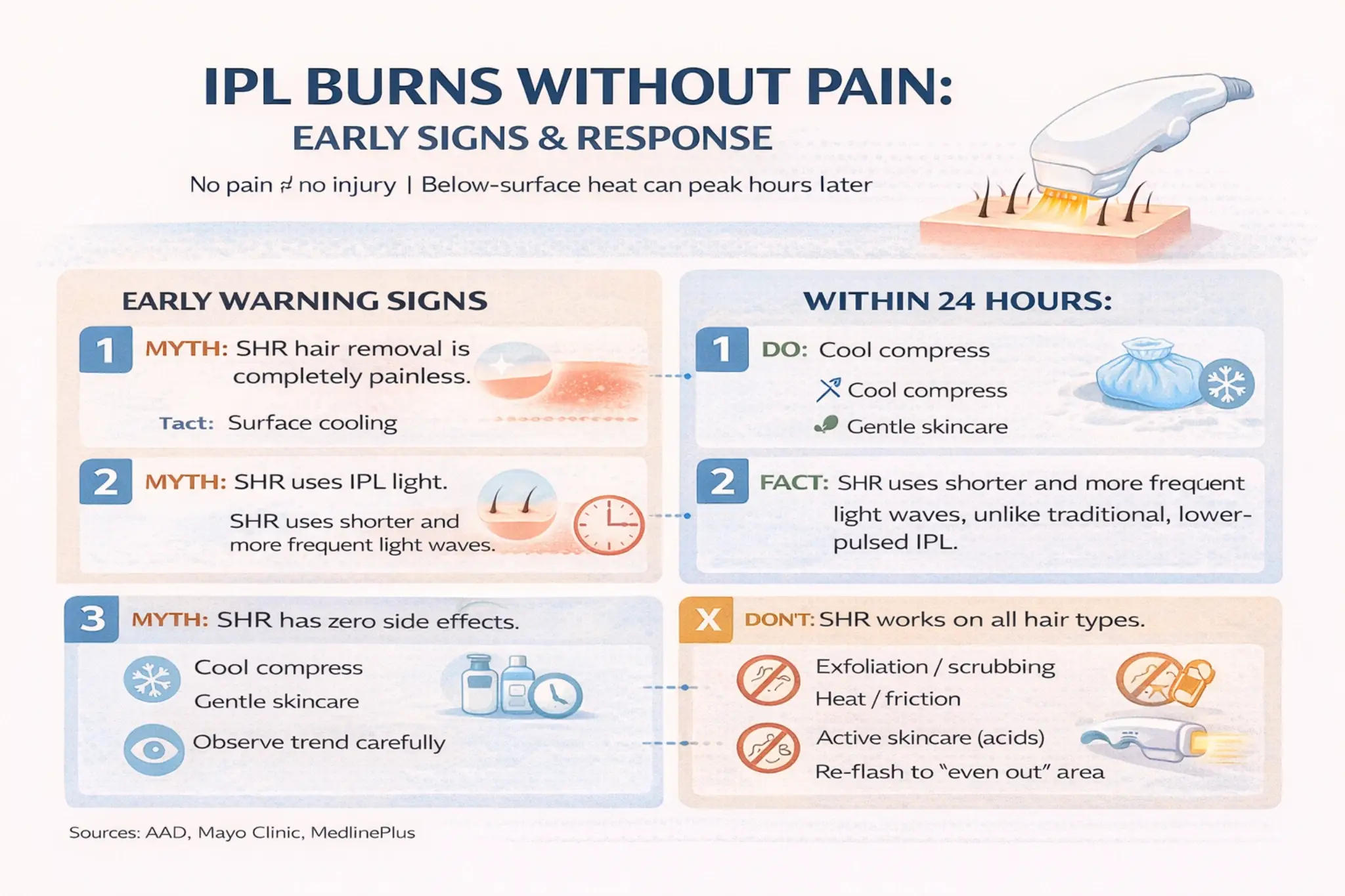
1) Why a burn can feel “quiet” at first
IPL converts light to heat inside pigmented targets. The surface may cool fast, but deeper layers can keep accumulating heat. This can create a delayed pattern:
- 0–6 hours: mild redness, little pain
- 6–24 hours: warmth, swelling, deeper color
- 24–72 hours: blistering, crusting, or pigment changes
This is also why “finishing the session” after a questionable reaction can make outcomes worse.
2) Early warning signs that matter more than pain
Stop IPL on that area if you see:
- Redness getting darker or more irregular instead of fading
- Skin staying hot to the touch hours later
- A tight, shiny, “glazed” texture
- Swelling that appears without obvious tenderness
If you need a baseline for what normal reactions look like, compare here: What skin reactions are normal after using IPL?
3) Why certain areas are more deceptive
Burns without obvious pain show up more often on:
- Upper lip and face
- Underarms and bikini line
- Recently tanned or hormonally reactive skin
These zones can retain heat differently and may not generate proportionate discomfort. In practical terms: conservative starting levels and clean spacing are safety controls, not “optional comfort tips.”
If you treat sensitive areas, keep your boundaries clear: Is it safe to use IPL on sensitive areas?
4) What to do immediately if you suspect a silent injury
- Stop IPL on that area.
- Cool gently; avoid heat and friction.
- Pause active skincare (acids/retinoids/benzoyl peroxide) until fully calm.
- Track trend for 24–48 hours: settling vs escalating.
For the “first 24–48 hours” skincare lane: What skincare is safe in the first 24–48 hours after IPL?
5) Why you can react at a level you “tolerated before”
Your skin’s safety margin can drop if you have:
- Recent sun exposure (how long to wait after sun exposure before IPL)
- A disrupted barrier from strong skincare
- Back-to-back sessions without full recovery
When conditions change, patch testing is your reset button: How do you perform a patch test before IPL?
6) When to stop and seek medical advice
If you develop blistering, open skin, rapidly increasing swelling, or progressive pain, treat it as a stop signal and consider professional evaluation. A clearer stop framework is here: When should you stop IPL and seek medical advice?
Realistic note: IPL is routine-based. Protecting skin integrity is what enables long-term progress. Ignoring quiet warning signs is what most often turns a minor reaction into a major setback.
Sources & references (third-party, verifiable)
Part of this series: IPL Troubleshooting Hub