
MITHLUX · Official IPL Device Store
Short answer: Because IPL energy is absorbed by pigment, it’s usually safest to avoid flashing directly over tattoos and very dark spots, and to treat around them with a small buffer zone.
This topic matters because it’s one of those “quiet burn risks” people don’t notice until later. IPL doesn’t just “see hair.” It sees melanin and dark pigment. That’s why a tattoo or a very dark mole can soak up energy differently than the surrounding skin.
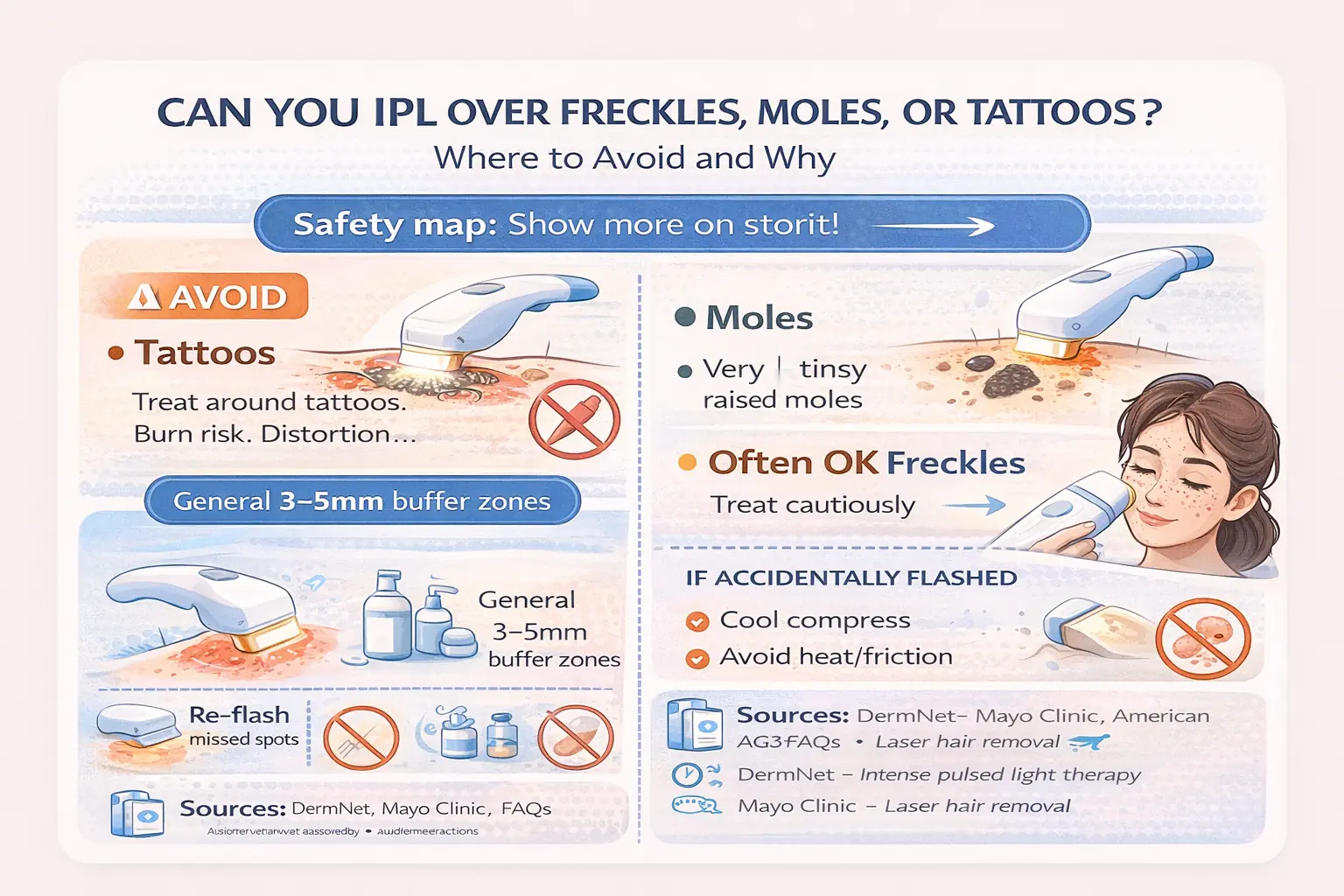
Why pigment changes the risk (the simple mechanism)
Light-based hair removal relies on selective heating: energy is absorbed by pigment and converted into heat. That’s how hair follicles are targeted—but it also explains why darker ink or dark spots can heat faster than you expect.
DermNet explains IPL is used for various pigment-related conditions because it targets melanin in the skin. That pigment-targeting principle is exactly why caution is needed around tattoos and very dark spots. (Authority reference: DermNet — Intense pulsed light therapy)
Tattoos: the clearest “avoid” zone
- Why avoid: tattoo ink can absorb light energy strongly and unpredictably, increasing burn/blister risk and potentially distorting the tattoo.
- What to do instead: shave and treat the surrounding hair-bearing skin, leaving a buffer around the tattoo.
If you’re dealing with any “delayed heat” feeling, use this stop-signal guide: Can IPL cause burns without obvious pain? Early warning signs you shouldn’t ignore.
Freckles: often OK to treat, but read the pattern
Freckles are pigment clusters. Many people can treat around freckled skin without issues, but the safer approach is:
- Start conservative (lower level, smaller area).
- Watch the 12–24h trend: does the area calm down, or does it get hotter/redder later?
- If freckles are very dense/dark in one patch, treat around that patch first and test cautiously.
Moles: treat with extra respect (especially dark or raised ones)
Not all moles are the same. For home IPL, a practical rule is: the darker and more raised a spot is, the more you should avoid direct flashing. If you’re unsure, treat around it and consider professional advice.
When it comes to “red flags you shouldn’t push through,” keep this page as your boundary: When should you stop IPL and seek medical advice? Red flags you shouldn’t push through.
A simple “buffer zone” method (so you still get results)
Instead of trying to be perfect, be consistent:
- Mark the spot (tattoo edge / dark mole) mentally before you start.
- Leave a small buffer around it (don’t place the window directly on it).
- Fill in around the buffer with clean, non-overlapping spacing.
- After 24–48 hours, if skin is calm, continue your routine—don’t “make up” missed flashes aggressively.
If you accidentally flashed a tattoo or dark spot
Don’t spiral—do a calm, boring response:
- Cool compress (short intervals), keep the area clean.
- Avoid heat, friction, and active skincare for 24–48 hours.
- Watch for delayed signs: increasing pain, swelling, blistering, spreading redness.
Mayo Clinic notes skin reactions can occur after light-based hair removal and recommends cooling/aftercare steps for discomfort. (Authority reference: Mayo Clinic — Laser hair removal)
Why “more passes” makes this risk worse
Overlapping energy is what turns “a warm session” into “a hot mistake,” especially near pigment-dense areas. If you’ve ever considered doing two passes to chase missed hair, read this first:
One Pass or Two Passes? When a Second Pass Is Risky (and When It’s Unnecessary)
Part of this hub: IPL Troubleshooting
Related content
- Can IPL cause burns without obvious pain? Early warning signs you shouldn’t ignore
- Redness After IPL: What’s Normal vs When to Pause
- Darkening or Uneven Tone After IPL: How to Respond Safely
- Patchy IPL Results: How to Fix Missed Spots Without Over-Flashing
- Treating Too Large an Area in One Session: Why “More” Can Backfire