
MITHLUX · Official IPL Device Store
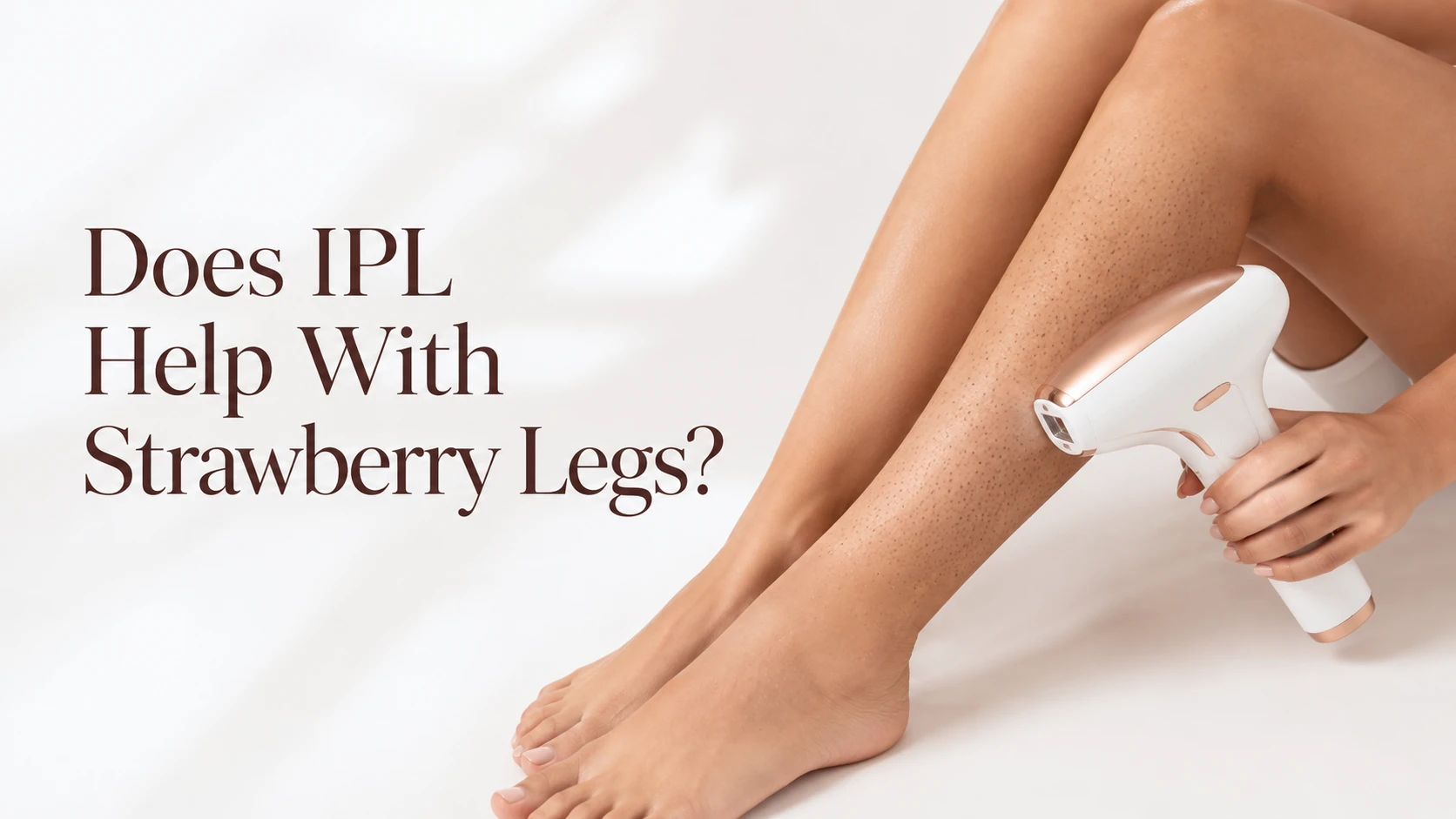
Strawberry legs are a common reason people start looking beyond shaving for longer-lasting hair reduction. The small dark dots that appear across the legs can become especially noticeable after shaving, when hair begins growing back, or when follicles become irritated.
This naturally raises an important question: can IPL help with strawberry legs?
The answer is sometimes — but it depends on what is causing the dots in the first place.
IPL can reduce hair growth over time, which may make some hair-related causes of strawberry legs less noticeable. However, IPL does not directly treat every condition that can create dark or visible follicle dots.
What Are Strawberry Legs?
“Strawberry legs” is an informal term used to describe small dark dots or visible pores across the legs. The appearance can resemble the tiny seeds on the surface of a strawberry.
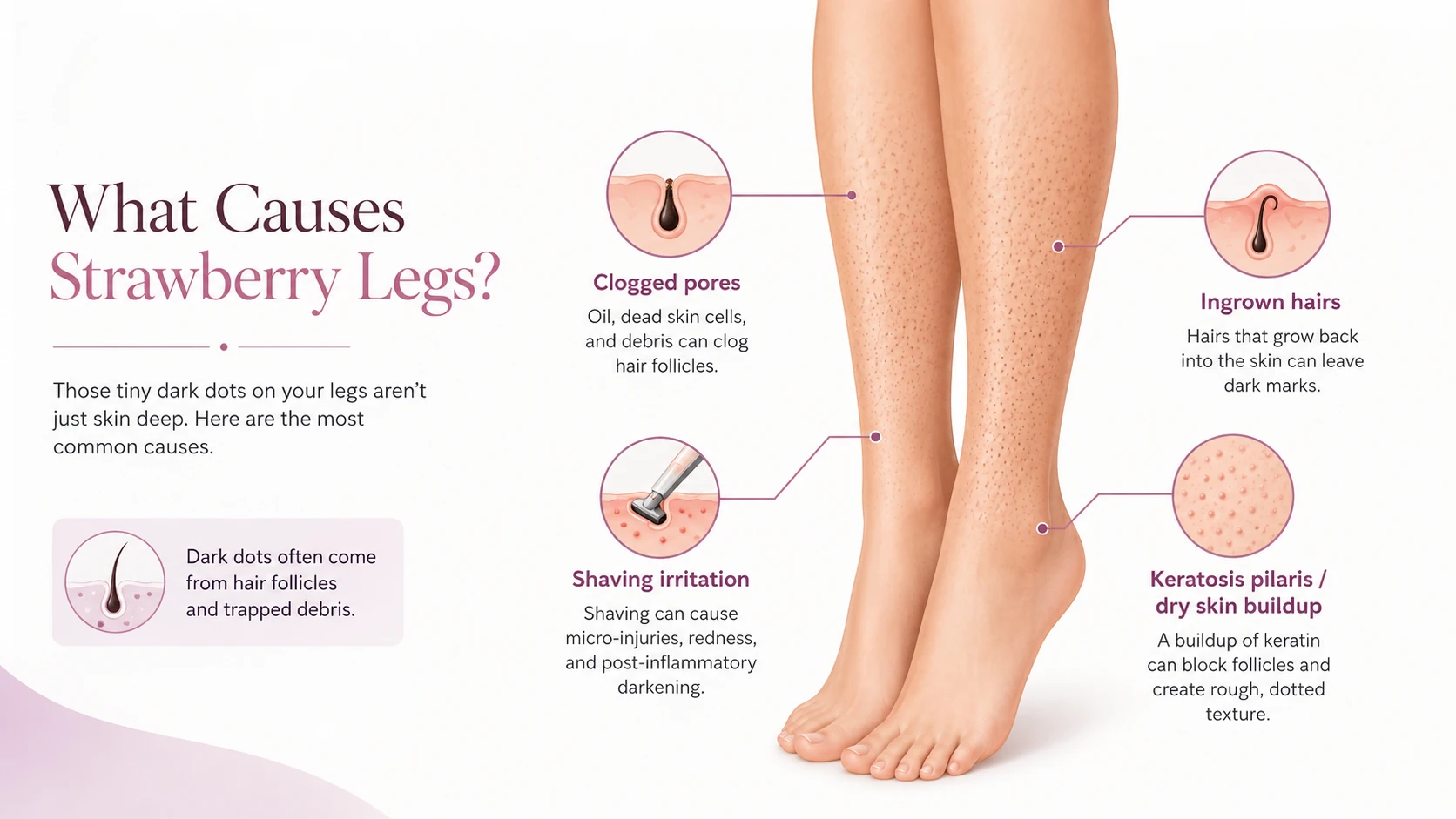
Several different things can contribute to this appearance, including:
- dark hair visible inside or just below the follicle opening
- short hair remaining after shaving
- frequent shaving and follicle irritation
- ingrown hairs
- clogged or irritated follicles
- natural pigmentation around the hair follicle
- dry or rough skin that makes follicle openings more visible
This distinction matters because IPL primarily targets pigmented hair. It does not function as a pore treatment, exfoliating treatment, or general treatment for skin pigmentation.
Can IPL Help With Strawberry Legs?
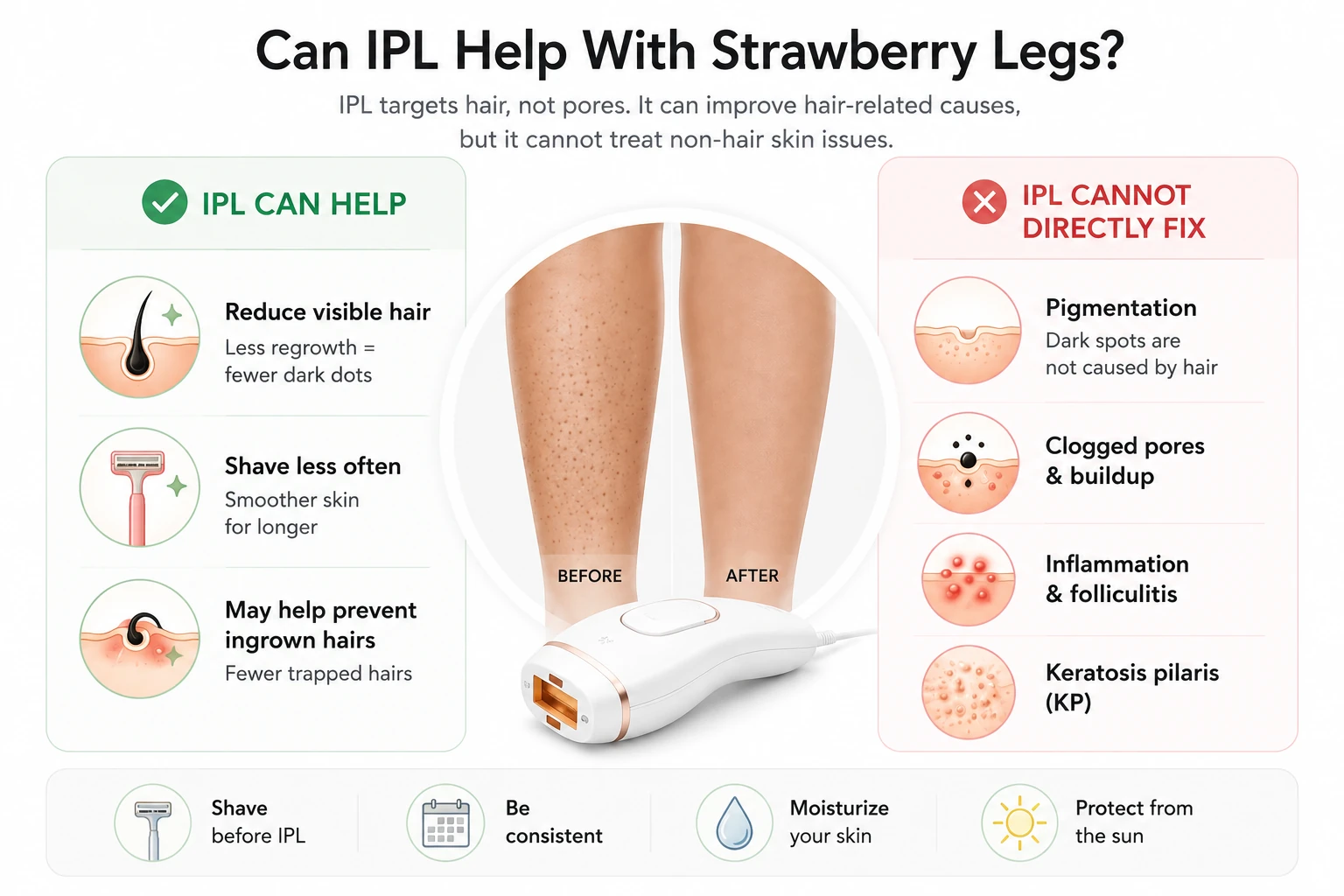
IPL may improve the appearance of strawberry legs when a significant part of the problem is related to visible dark hair, shaving frequency, or recurring hair growth inside the follicles.
IPL devices work by delivering pulses of broad-spectrum light that are absorbed by pigment in suitable hair. Repeated treatments can gradually reduce the amount and thickness of visible regrowth.
If less dark hair is growing through the follicles, there may eventually be fewer dark hair-associated dots visible across the legs.
This is why some people notice that their legs appear smoother or more even-looking after several weeks of consistent IPL use, even though IPL is not directly “shrinking pores.”
For a more detailed explanation of how IPL interacts with hair pigment, see What Is IPL Hair Removal and How Does It Work?.
When IPL Is Most Likely to Help
IPL is most relevant when strawberry-leg appearance is strongly connected to hair.
1. Dark Hair Is Visible Inside the Follicles
Someone with relatively light skin and dark leg hair may see small dark dots soon after shaving because the remaining hair beneath the skin is still visible.
As IPL gradually reduces regrowth, these hair-related dots may become less obvious.
Hair thickness also matters. Coarse terminal hairs can create more visible follicle contrast than very fine hair. You can read more in Does Hair Thickness or Coarseness Affect IPL Results and Comfort?.
2. Frequent Shaving Is Contributing to Irritation
People with fast-growing leg hair may shave frequently. Repeated shaving can leave the skin feeling rough and can make follicle openings more noticeable, particularly when the skin is already dry or irritation-prone.
If IPL successfully reduces how often visible hair returns, some users may eventually need to shave less frequently.
That does not mean shaving should be avoided during an IPL routine. In fact, shaving is usually the preferred method of removing surface hair between treatments because the hair root needs to remain available for light-based hair reduction.
See Can You Shave Between Leg IPL Sessions? for more detail.
3. Ingrown Hairs Are Part of the Problem
Ingrown hairs can also contribute to dark dots, bumps, and uneven-looking follicles.
IPL is not an instant treatment for an existing ingrown hair. However, reducing future hair growth may indirectly reduce one factor involved in recurring ingrown hairs for some users.
If bumps are already present, it is important to distinguish between irritation, clogged follicles, and ingrown hairs before repeatedly flashing the same area. Our guide Bumps After IPL: Clogged Follicles, Irritation, or Ingrowns? explains these differences in more detail.
What IPL Cannot Fix
This is the part that is often overlooked.
Not every case of strawberry legs is primarily caused by hair.
If the dark dots are mainly related to skin texture, persistent pigmentation, keratin buildup, chronic follicular inflammation, or another skin condition, reducing hair may not completely remove the appearance.
IPL should therefore not be treated as a general cure for:
- large or naturally visible pores
- persistent skin pigmentation unrelated to hair
- keratosis-like roughness
- active folliculitis
- eczema or inflammatory skin conditions
- infected or significantly inflamed ingrown hairs
If the appearance remains unchanged even after hair growth has noticeably decreased, hair may not be the main cause.
IPL vs Shaving for Strawberry Legs
Shaving removes hair at or close to the skin surface. It is fast and convenient, but hair begins growing again relatively quickly.
For people with coarse or dark leg hair, the remaining portion of the hair beneath the skin can sometimes remain visible even immediately after shaving.
IPL takes a different approach. Instead of simply cutting the hair, repeated IPL treatments aim to reduce future regrowth.
This means the comparison is not really:
“Which method removes strawberry legs?”
A better question is:
“How much of the strawberry-leg appearance is being created by visible and recurring hair?”
If hair is a major contributor, long-term hair reduction may make a meaningful visual difference.
How Long Might It Take to Notice a Difference?
Do not expect the dots to disappear after one or two sessions.
IPL works gradually because hairs are not all responding at the same stage of their growth cycle at the same time. Consistent treatment over several weeks is usually more important than trying to use the highest possible setting immediately.
During the first few weeks, you may notice changes such as:
- hair returning more slowly
- some areas staying smoother for longer
- less dense regrowth
- fewer highly visible dark hairs inside some follicles
The appearance of the skin may improve gradually as hair reduction becomes more noticeable.
For a realistic leg-specific timeline, see Leg IPL Results Timeline: Week 1–12 + Maintenance.
You may also find How Do You Know If IPL Is Helping Even Before Hair Falls Out? useful when evaluating early progress.
How to Use IPL on Strawberry-Prone Legs
If your legs already develop dark dots, bumps, or irritation easily, aggressive treatment is usually not the best strategy.
Start With Clean, Calm Skin
Do not treat immediately over skin that is significantly irritated, inflamed, scratched, or recently sunburned.
Before beginning a new routine, review How to Prepare Your Skin for Safe At-Home IPL Sessions.
Shave Without Over-Irritating the Skin
Shaving before IPL helps remove surface hair so that excessive energy is not absorbed by hair sitting above the skin.
However, pressing repeatedly over the same patch with a dull razor can leave the skin more irritated before treatment even begins.
If shaving itself causes strong redness or discomfort, allow the skin to settle before using IPL.
Do Not Keep Re-Flashing Dark Dots
A common mistake is assuming that every visible dark follicle needs extra flashes.
Repeatedly treating the same spot during one session does not necessarily make the treatment more effective and may increase irritation.
See One Pass or Two Passes? When a Second Pass Is Risky for a more detailed explanation.
Avoid Missing Large Areas
When treating the legs, it is easy to leave small untreated strips between flashes. This can create patchy results that make follicle contrast look even more uneven.
Our guides How Far Apart Should Leg Flashes Be? and What to Do About Missed Patches on Legs cover this problem in more detail.
What If Your Hair Is Very Coarse?
Coarse, dark leg hair can make strawberry-leg dots particularly noticeable because the contrast between the hair and surrounding skin is stronger.
That same strong pigment contrast may also make these hairs appropriate IPL targets when the user's skin tone and hair color fall within the device's recommended range.
However, thicker hair does not mean results will happen instantly. Hair cycles still matter, and several sessions are normally needed.
For more detail, see Does IPL Work on Coarse Hair?.
Can Strawberry Legs Look Worse at First?
Sometimes they can appear temporarily more noticeable, especially if the skin becomes dry after shaving or if early regrowth is uneven.
IPL users may also notice that some hairs appear to remain in the follicles before naturally releasing.
This does not automatically mean the treatment is failing.
However, persistent redness, painful bumps, unusual darkening, or worsening irritation should not simply be ignored.
If skin becomes irritated after treatment, see Redness After IPL: What’s Normal vs When to Pause.
What If the Dark Dots Remain After Hair Reduction?
This is an important clue.
If your leg hair becomes noticeably finer or slower-growing but the dark dots remain almost unchanged, the appearance may be driven more by the skin around the follicle than by the hair itself.
At that point, increasing IPL intensity is unlikely to be the right solution.
IPL should not be used as a substitute for appropriate skin care or medical evaluation when persistent pigmentation, inflammation, pain, or another skin condition is involved.
Who Should Be More Cautious?
Extra caution is appropriate if your legs have recently been heavily sun-exposed, if your skin tone varies significantly across the treatment area, or if you have irritated or damaged skin.
Useful related guides include:
- How to Adjust Leg IPL Around Sun Exposure / Summer
- What If You Have Uneven Skin Tone or Tan Lines?
- Is Your Skin Tone & Hair Color Suitable for At-Home IPL?
So, Does IPL Get Rid of Strawberry Legs?
IPL can help some forms of strawberry-leg appearance, but it does not directly treat every possible cause.
If dark follicle dots are largely caused by coarse dark hair, visible regrowth, frequent shaving, or hair-related follicle irritation, reducing hair growth may make the legs look smoother and the dots less noticeable over time.
If the dots are primarily caused by pigmentation, skin texture, inflammation, or another skin condition, IPL may have little effect on that part of the appearance.
The most realistic expectation is therefore not “IPL will erase strawberry legs,” but rather:
IPL may reduce the hair-related factors that make strawberry legs more visible.