
MITHLUX · Official IPL Device Store
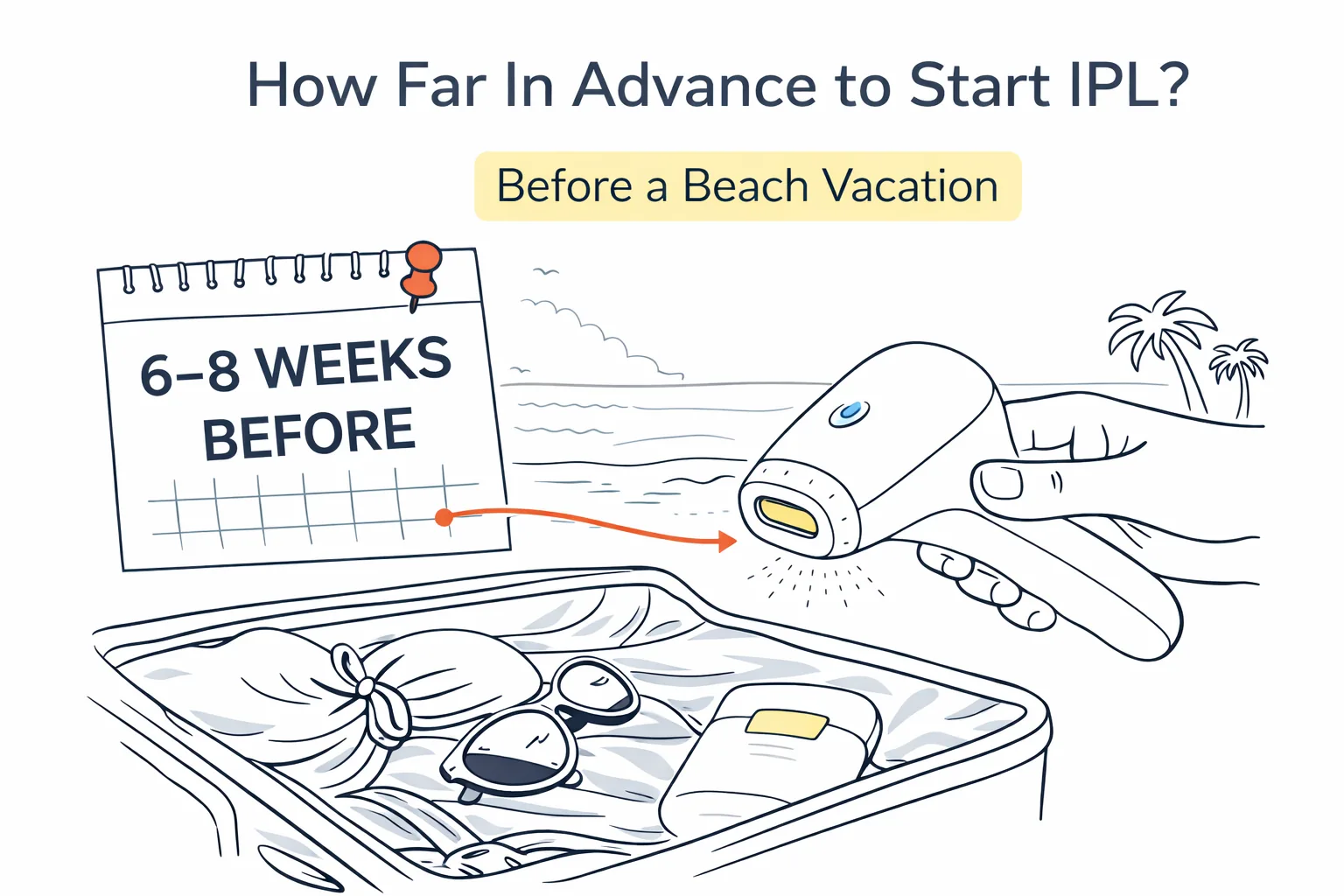
Short answer: Yes — but only if you start early enough. For most beginners, starting IPL about 6–8 weeks before a beach vacation is more realistic than starting at the last minute, because it gives you time for patch testing, gradual progress, and safer adjustments around sun exposure.
A beach trip sounds like a deadline, so it is easy to think: “Maybe I can squeeze in a few sessions and be done.” But IPL usually works better when you treat it like a routine, not a rush. A vacation often brings stronger sun exposure, heat, sweating, friction, outdoor activities, and less control over your schedule. That means the best timing is not just about how fast hair reduction starts — it is also about whether your skin will stay calm while you get there.
If you are new to IPL, the smarter goal is not trying to finish before the trip. It is giving yourself enough time to start carefully, see how your skin responds, and avoid putting yourself in a situation where you have to choose between progress and safety.
Why IPL timing matters more before a beach trip
IPL is not a one-session fix. It usually needs repeated sessions over several weeks, and those sessions work best when your skin tone is stable and your routine is consistent. A beach vacation can interrupt both.
Sun exposure matters because it can make timing more complicated. If your skin becomes more tanned than usual, more reactive than usual, or just harder to read clearly, it becomes more difficult to decide whether to continue, lower the level, or pause. That is why many people do better when they begin earlier instead of trying to start right before travel.
If you want to understand what a normal early timeline looks like, these two guides help set realistic expectations: What Does “Working Normally” Look Like After 2, 4, and 8 Weeks of IPL? and How Do You Know If IPL Is Helping Even Before Hair Falls Out?.
The most realistic window: 6–8 weeks ahead
For most first-time users, 6–8 weeks before your beach vacation is the most practical starting point.
- 8+ weeks ahead: ideal if you want time to patch test, start gradually, and see whether your skin stays comfortable.
- 6 weeks ahead: still reasonable for many body areas if you stay consistent and do not run into sensitivity or sun-related interruptions.
- 3–4 weeks ahead: possible for getting familiar with the device, but usually too short for meaningful expectations if you are hoping for clearly reduced regrowth before the trip.
- 1–2 weeks ahead: usually not a smart time to begin from scratch, especially if your trip will involve a lot of sun, swimming, or heat.
The earlier window is not just about chasing results. It gives you room for something even more important: adjustment. If your skin feels more reactive than expected, if one area responds differently, or if your trip suddenly includes more outdoor time than planned, you still have time to slow down safely instead of forcing the routine.
What changes if you are completely new to IPL
If this is your first time using IPL, your first step should not be a full routine. It should be a patch test. Even if your skin usually handles products well, light-based routines are different because the question is not only “Can my skin tolerate this?” but also “How does this area react over the next 24–48 hours?”
Start with a proper patch test before IPL, especially if your vacation is coming up soon. That gives you a more honest picture of how your skin behaves before you commit to a larger area.
If you notice that one part of the treatment zone is darker, more sensitive, or more reactive than the rest, this matters even more before travel. In that case, it helps to think in sections rather than one big area. This is exactly why a guide like What If Only Part of the Area Is Darker Than the Rest? How to Patch Test Uneven Areas becomes useful.
Which areas are easier to start before vacation — and which need more caution
Body areas are not all the same. Some are easier to begin ahead of travel, while others need a more conservative approach.
Often easier to start earlier: legs, lower legs, underarms, and other areas where you can monitor the skin more easily and manage coverage with a stable routine.
Usually needs more caution: face, upper lip, bikini line, and any area that tends to be more sensitive, more visible, or more affected by heat, friction, and skincare products.
If you are treating multiple areas at once, remember that a vacation deadline can push people into doing too much in one session. That is not always wise. You may want to read Can You Treat Underarms and Bikini Line on the Same Day? Spacing, Levels, and What to Adjust and Should Face and Body IPL Follow the Same Schedule? Why Upper Lip Often Needs a Different Approach before deciding how aggressive your routine should be.
If your trip is only a few weeks away, what should your goal be?
If you have only a short time left before your trip, your goal should change. Do not expect a full visible transformation. Focus instead on:
- learning how your skin responds,
- building a careful routine,
- avoiding obvious mistakes,
- and setting yourself up for a smoother routine after the vacation.
This is where realistic thinking matters. Many people get disappointed not because IPL is “not working,” but because they started too late and expected too much before a fixed date. If you only have 2–3 weeks, think of it as a preparation phase, not a finish line.
When starting right before vacation is usually not worth it
Starting right before a beach trip is often not worth it if any of these are true:
- you have never patch tested the device before,
- your trip will involve strong sun exposure most days,
- you already know your skin gets irritated easily from heat or friction,
- you are planning to treat sensitive areas for the first time,
- or you are hoping for near-finished results from just a few sessions.
In those cases, the better move is often to wait until after the trip, or at least keep the routine minimal and cautious. It is better to start slightly later with more control than slightly earlier with poor timing.
What about sun exposure before and after each session?
Before a beach vacation, this is one of the biggest practical issues. Even people who are normally careful can end up getting more sun than expected: walking more, sitting outside longer, taking day trips, using different skincare, or simply spending more time in the heat.
That is why your routine should leave room for uncertainty. If your trip includes beaches, outdoor pools, resort days, or extended sightseeing, do not assume your skin condition will stay exactly the same.
For this part, your safest companion article is How Long Should You Wait After Sun Exposure Before IPL?. It helps you think in terms of timing and recovery instead of guessing.
If you are too busy before the trip, should you still try to treat every area?
Usually no. Trying to do everything at once before travel often leads to rushed coverage, inconsistent spacing, or treating when you are tired and distracted. A more realistic approach is to prioritize the areas that matter most to you and leave the rest for later.
If your pre-vacation schedule is already packed, this guide may help: What If You’re Too Busy to Treat Every Area Weekly? Which Areas Should You Prioritize First?.
This matters because consistency usually beats ambition. A smaller, calmer routine done properly is often better than a large rushed routine done badly.
Can you continue IPL during the vacation itself?
Usually, a beach vacation is not the best time to begin or intensify an IPL routine. Between sun exposure, heat, sweat, sand, travel fatigue, and an irregular schedule, it is simply harder to make clean decisions.
If you are already mid-routine and your trip is not especially sunny, you may be able to continue carefully in some cases. But for most people, especially beginners, vacations are better treated as periods where you protect your progress rather than push it.
And if your routine becomes irregular during travel, that does not mean everything is ruined. A perfect weekly schedule is not always necessary. What matters more is not overreacting, over-treating, or trying to “make up” for missed time in a single session. That is why is worth reading too.
A simple way to decide
If you are asking whether now is the right time to start, use this quick reality check:
- Start now if your trip is still 6–8 weeks away, your skin is stable, and you can patch test first.
- Start carefully if you have around 4–6 weeks and your main goal is learning your response, not chasing dramatic visible reduction.
- Wait if the trip is very close, sun exposure will be heavy, or you are likely to rush sensitive areas without enough observation time.
The calmest decision is usually the best one. IPL tends to reward consistency, patience, and good timing more than urgency.