
MITHLUX · Official IPL Device Store
Who Should (and Should Not) Use At-Home IPL
A calm, responsibility-first guide to help you decide: start now, pause & adjust, or don’t use IPL. This isn’t about “power” — it’s about fit, skin safety, and realistic expectations.
Reference only. Always follow your device instructions and do a patch test first. If you already started and results feel slow / patchy / irritating, use the troubleshooting hub: IPL Troubleshooting.
Short answer: At-home IPL is most likely to be a good fit when your skin + hair contrast is suitable, you can follow a weekly routine for several weeks, and your skin can stay calm without frequent irritation. It’s usually not a good fit if you’re in a low-contrast range (very light hair), you have active skin issues in the area, or you’re hoping for a one-time, instant result.
Start here: which one sounds like you?
Good candidate (start now)
- Skin + hair contrast looks suitable
- Skin in the area is calm (no active irritation)
- You can commit to a weekly routine for 6–12 weeks
Jump to: 30-second fit check → Start safely
Maybe (pause & adjust)
- Not sure about skin tone / hair color suitability
- Recently used strong skincare actives or had sun exposure
- Sensitive areas (face/upper lip/underarms/bikini) and unsure about spacing
Jump to: Pause rules → Restart plan
Not a fit (don’t use)
- Hair is very light (white/gray/red/blonde) or low-contrast
- Active skin issues in the area (broken skin, infection, etc.)
- History suggests you’ll likely react (frequent burning/peeling sensitivity)
Jump to: Who should not use IPL
A practical fit check (30 seconds)
IPL relies on contrast: light is absorbed more by hair pigment than skin pigment. If contrast is low, results can be slow — or limited.
- Skin + hair: Are you in a “slow/limited” range on a suitability chart?
- Routine: Can you truly do weekly sessions without big gaps?
- Technique basics: Shave close, keep consistent spacing, avoid chasing missed hairs.
- Comfort: Any irritation forcing pauses often? If yes, reset first.
Two-step self-check (before you start)
- Photo check: In daylight, compare your hair color to the 3-zone chart (don’t guess under warm indoor light).
- Patch test check: If you patch test and your skin stays calm, you’re usually safe to begin a weekly routine.
Realistic note: good candidates still need consistent weekly sessions — “more power” can’t replace consistency.
If you want a baseline check first, use: IPL Suitability Checker and the guide: Skin Tone & Hair Color Guide for IPL.
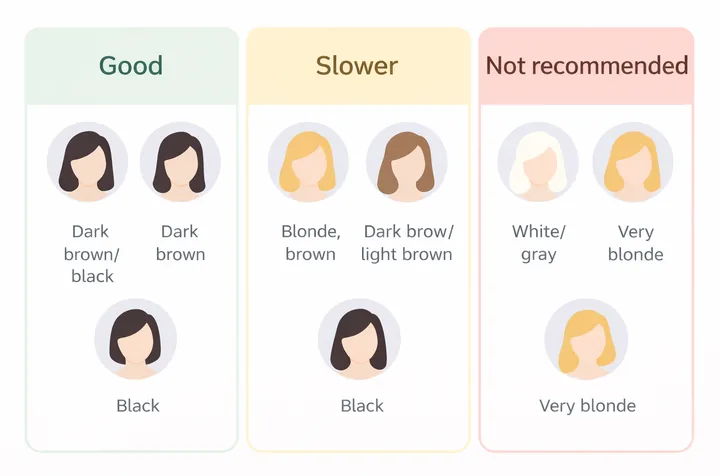
Who is most likely to do well with at-home IPL?
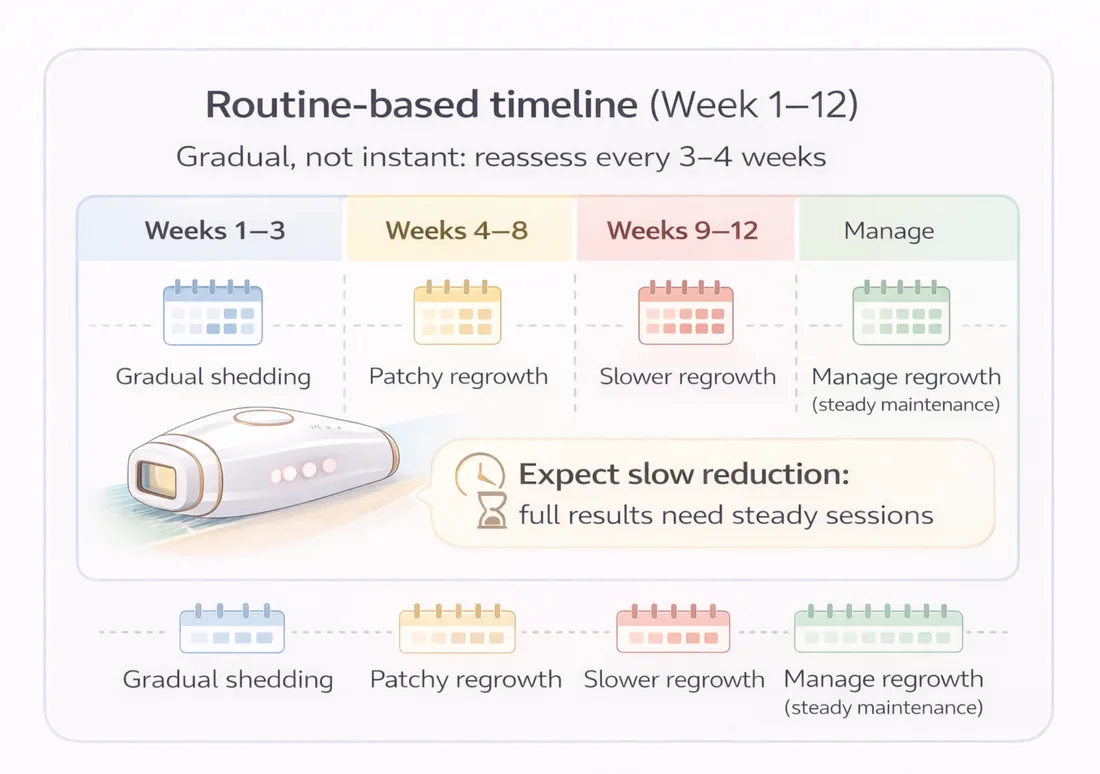
Think “steady routine + suitable contrast + calm skin.” If you match these, IPL usually becomes predictable.
Best-fit checklist
- Hair has enough pigment (not very light/gray/white)
- Skin is not tanned or irritated in the area
- You’re okay with gradual results (weeks, not days)
- You can keep sessions weekly
Realistic expectations (the trust part)
- Track progress weekly, not “right after a session”
- Some areas respond faster/slower (legs vs underarms vs face)
- Consistency beats intensity
If you feel “it’s not working,” go here: IPL Troubleshooting.
Who should not use at-home IPL?
This section is intentionally conservative. If you’re in doubt, choose the safer option and get professional guidance.
Common “not a fit” situations
- Very light hair: white/gray, very blonde, or red hair often responds poorly because there’s little pigment to target.
- Very low contrast: if suitability charts place you in “not recommended / limited,” don’t force it by increasing level.
- Broken skin or active infection in the area: pause until fully healed.
- Unclear medical context: if you have a condition or medication that affects skin sensitivity, get clinician guidance first.
For contrast & suitability, use: Skin Tone & Hair Color Guide for IPL and: IPL Suitability Checker.
A calm “pause rule” you can trust
If your skin isn’t calm, don’t “push through.” A clean reset is usually faster than forcing sessions and creating longer recovery.
Stop / Pause / Continue (simple rules)
- Continue: mild warmth or light redness that settles quickly.
- Pause & adjust: redness lasts longer than expected, discomfort is building, or irritation trends upward over days/sessions.
- Stop & get advice: blistering, broken skin, intense swelling, or strong pain that doesn’t improve.
If you’re reacting, start with: IPL Prep & Skincare Compatibility and troubleshooting: Redness After IPL: What’s Normal vs When to Pause, Darkening or Uneven Tone After IPL: How to Respond Safely, Bumps after IPL: clogged follicles, irritation, or ingrowns?.
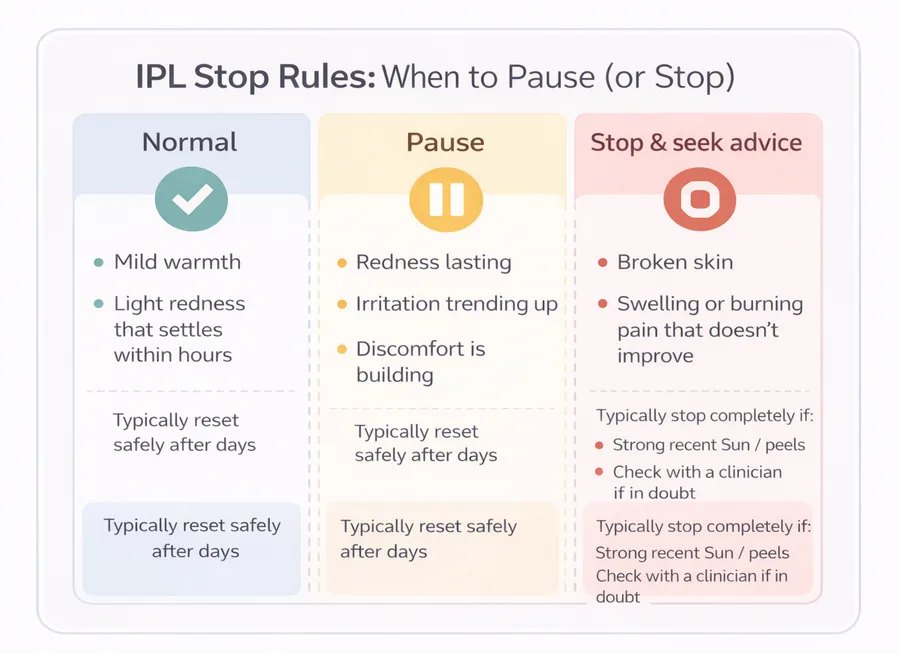
If you’re a fit: how to start safely (without guessing)
Do this
- Patch test a small area first.
- Start conservative (especially on face, underarms, bikini).
- Use a consistent spacing pattern rather than “random tapping.”
- Track weekly change (regrowth speed, thickness, patch size).
Avoid this
- Don’t “chase missed hairs” with repeated flashes on the same spot.
- Don’t compress sessions to “catch up” (more isn’t faster).
- Don’t raise level to compensate for poor suitability or inconsistent schedule.
If you feel tempted to do more often, read: How often should you use IPL at home?
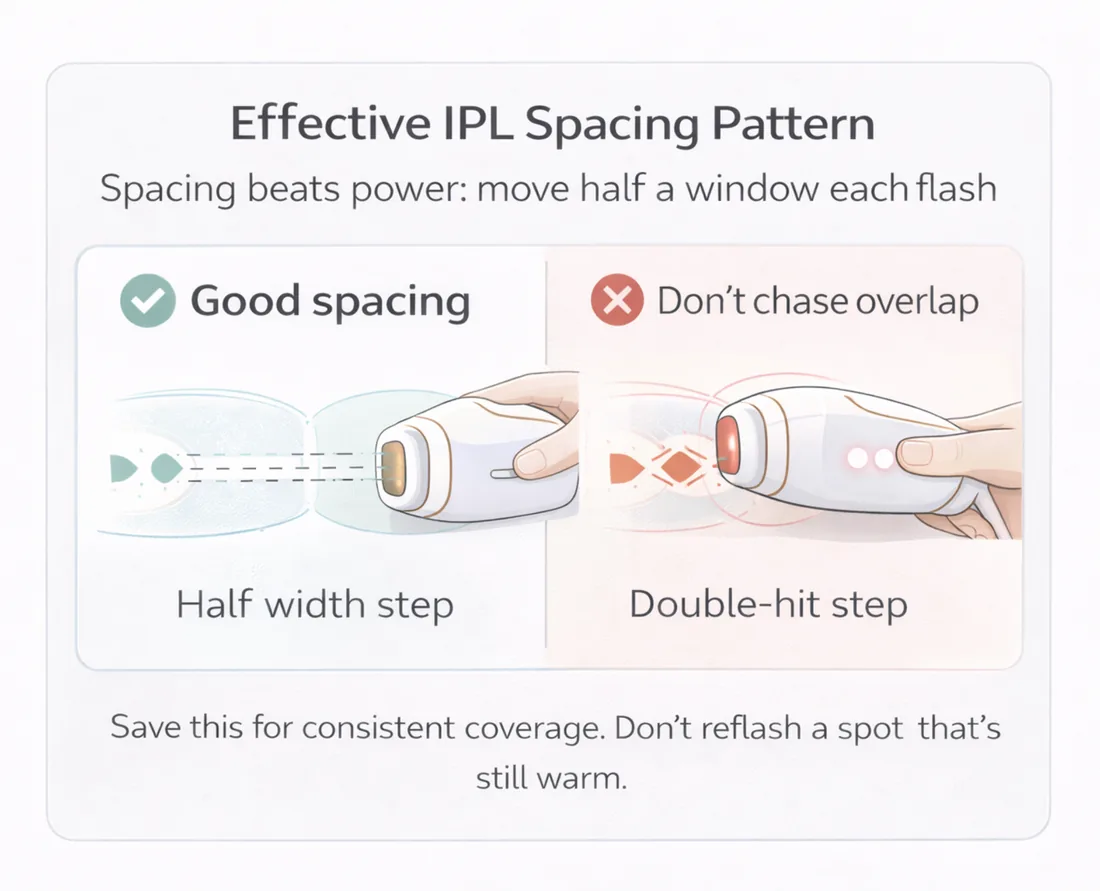
Restart plan (when you paused or reacted)
7 days to calm down + 4 weeks to get back on track
7-day reset (comfort first)
- Day 0–2: keep skincare simple and gentle; avoid harsh actives.
- Day 3: patch test a small area at a lower, comfortable level.
- Day 4–7: if skin stays calm, resume one zone with conservative spacing and no overlap-chasing.
Next 4 weeks (consistency beats intensity)
- Keep a steady weekly rhythm (don’t compress sessions).
- Track weekly changes (same lighting helps).
- Adjust level gradually only if skin stays comfortable.
Helpful: Restarting after a break: how to patch test and reset levels, Sun Exposure and IPL Results: How Long to Wait (and How to Restart Safely), Retinol, Acids, Benzoyl Peroxide: When Skincare Makes IPL Feel Worse (or Look Ineffective)
Who-Should Guide — FAQs
Is at-home IPL safe for beginners?
For many people, yes — if you patch test, start conservative, and keep spacing consistent. Beginners get into trouble when they treat randomly, overlap repeatedly, or increase level to compensate for impatience. If you’re unsure, use the fit check above and start with one small zone first. See: Is at-home IPL suitable for beginners?.
Does hair color matter for IPL results?
Yes. IPL depends on pigment in hair to absorb light. Very light hair (white/gray, very blonde, red) often responds poorly. If you’re near the edge of suitability, focus on safe technique and consistent schedule — don’t “power up” as a workaround. See: Does hair color affect IPL results? and Skin Tone & Hair Color Guide for IPL.
What if my skin is sensitive?
“Sensitive” usually means you should start with a conservative level, reduce overlap risk, and be stricter about skincare timing (actives, peels, sun). If irritation trends upward, pause early and reset. Use: IPL Prep & Skincare Compatibility and What skincare is safe in the first 24–48 hours after IPL?.
I want “fast results.” Can I do IPL more often?
Doing sessions more often usually increases irritation risk without meaningfully speeding results. IPL is routine-based: weekly consistency wins. If results feel slow, check suitability, schedule, and spacing first — then adjust calmly. See: How often is it safe to use IPL at home? and IPL Troubleshooting: Why results are slow.
Ready to start a routine (the safe way)?
Realistic note: IPL is routine-based. Results are gradual over several weeks with consistent weekly use. If you’re looking for an instant, one-time fix, IPL may not be the best fit.
Shop MITHLUX IPLNot sure yet? Use the IPL Suitability Checker first, or review the User Manual.
Sources & references (third-party, verifiable)
These references support the general safety principles behind light-based hair removal: gradual results, importance of suitability, and conservative “pause rules” when skin reacts.
- American Academy of Dermatology (AAD) — Laser hair removal: FAQs
- Mayo Clinic — Laser hair removal: what it is, results, risks
- DermNet NZ — Intense pulsed light therapy (IPL) (overview, how it works, side-effects)
- ASDS — Laser Hair Removal (what to expect & safety)
Tip: For at-home routines, “safe and steady” is usually the fastest path long-term.
Related guides
Start here (most people ask these first)
- IPL Suitability Checker
- Is Your Skin Tone & Hair Color Suitable for At-Home IPL? (What “Not Suitable” Really Means)
- When IPL Is Not Worth Starting: A Reality-Based Eligibility Checklist
- Is It Worth Starting At-Home IPL If You’re Low-Contrast or “Borderline”?
If you need to wait (common “pause & restart” situations)
- IPL Eligibility After Retinol, Acids, or Active Skincare: When It’s Safe to Proceed
- Sun Exposure or Tan Lines: Are You Eligible to Start At-Home IPL Now?
- Self-Tanner / Spray Tan and IPL Eligibility: When Are You Eligible to Start Again?
- IPL Eligibility for Post-Procedure Skin (Peels / Lasers): When You’re Eligible to Start Again
If you’re changing hair removal methods
- Waxing or Epilating to At-Home IPL: Are You Eligible to Start (and How to Transition Safely)?
- IPL Eligibility When Shaving vs Trimming: Myths and Facts for Safer Results
Face / upper lip has different rules
- Face vs Body IPL Eligibility: Why Upper Lip Is Different (and How to Start Safely)
- IPL for Face & Upper Lip (Safety, Schedule & Aftercare)
High-stakes eligibility (read before you decide)
- IPL Eligibility for Deeper Skin Tones: Safety Reality, Patch Test Rules, and When to Avoid
- Antibiotics and IPL: Photosensitivity, Risks, and How Long to Wait
- Pregnancy & Breastfeeding: Can You Use At-Home IPL Safely?
- IPL Eligibility for Teenagers: When Is It Safe to Start IPL at Home?
Special cases (save this if your situation is more specific)
- Eczema-Prone Skin and At-Home IPL: Are You Eligible to Start?
- Rosacea or Redness-Prone Skin: Are You Eligible to Start At-Home IPL on the Face?
- Psoriasis and At-Home IPL Eligibility: Can You Start If You Have Active Plaques?
- Keloids and Hypertrophic Scars + At-Home IPL: Are You Eligible to Start?
- Tattoos & Permanent Makeup (PMU) and At-Home IPL: Are You Eligible — and How Far Away to Stay
- PCOS or Hormonal Hair Growth: Should You Start At-Home IPL or Wait?